
Welcome
Where Creativity Meets Creature Magic
Home of Jay’s Axolotl Army • Education • Adoption • Care • Morphs • Merch
Maniacal Threadz [EXOTICS] - STORE
About Maniacal Threadz [EXOTICS]
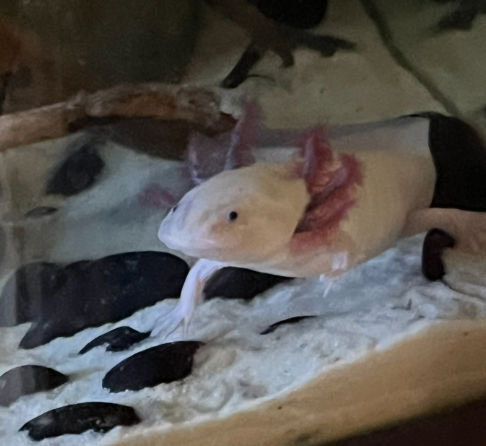
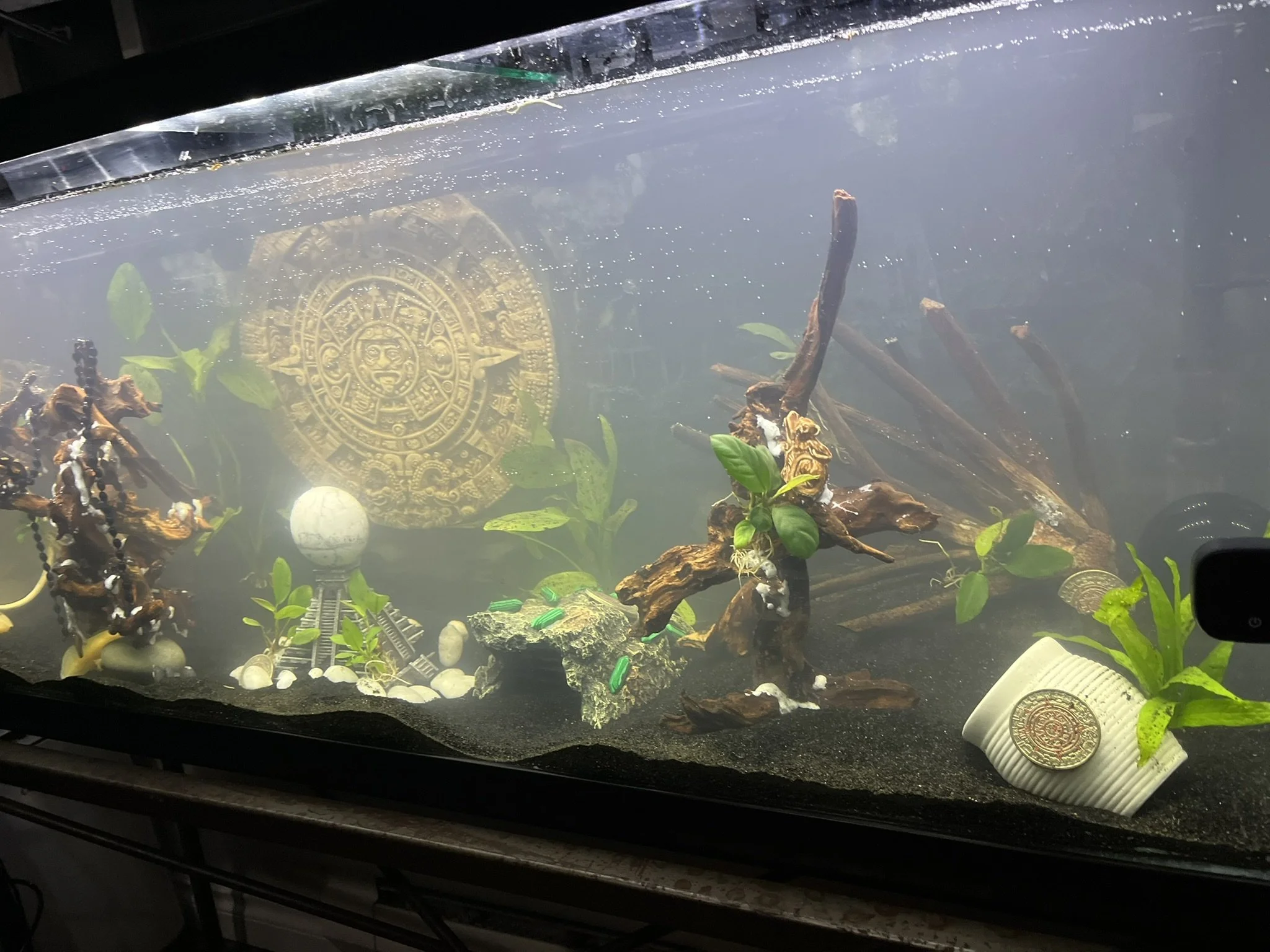
Maniacal Threadz Exotics is the aquatic sister-brand of Maniacal Threadz — a world where vibrant color, queer creativity, and compassionate animal care collide.
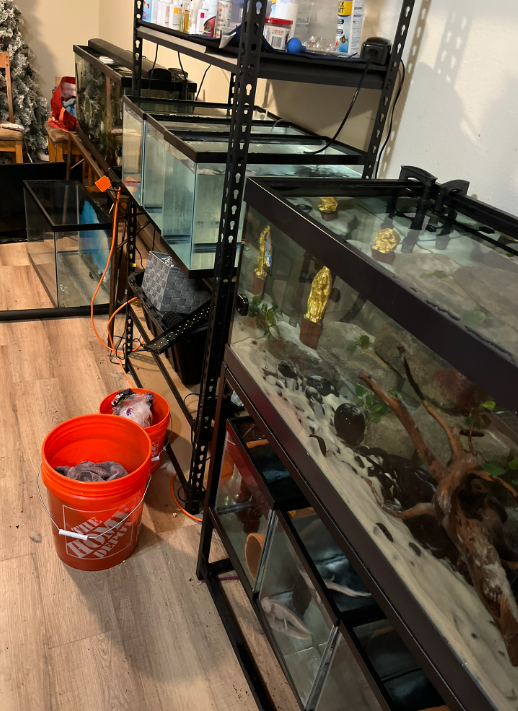
What began as one axolotl quickly evolved into a thriving, diverse Axolotl Army, each with their own quirks, morphs, and stories.
We blend science, art, and storytelling to make axolotl ownership accessible, ethical, and magical.
From education and responsible breeding to merch, media, and community outreach, MTE is built on kindness, curiosity, and the belief that every being — human or amphibian — deserves a space to grow, glow, and transform.
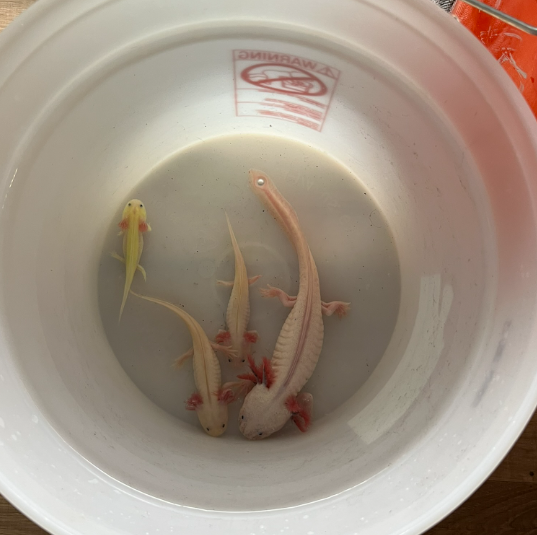
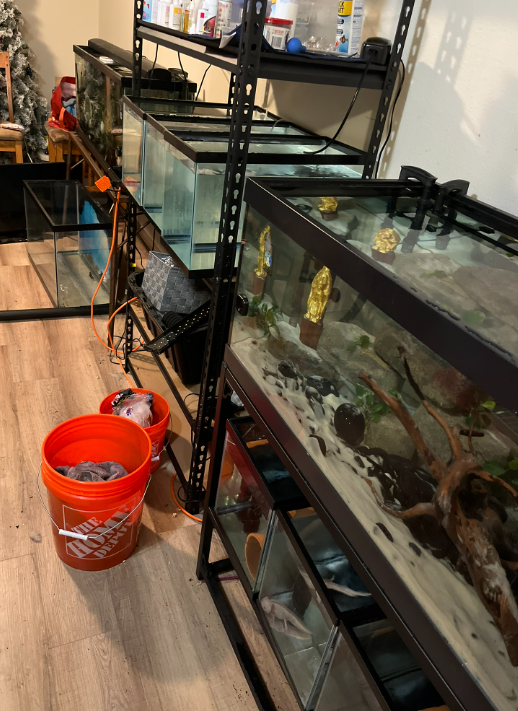
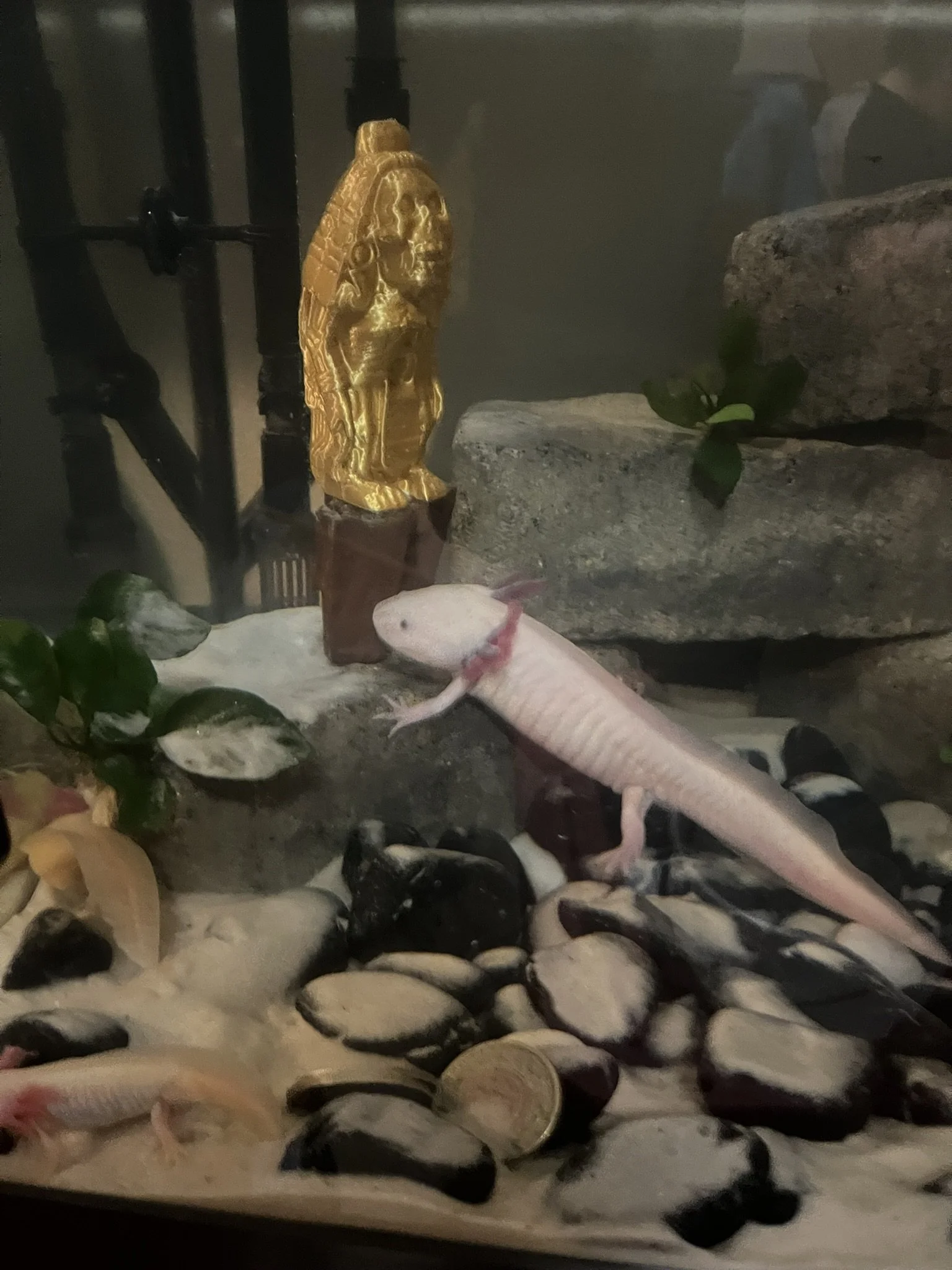
Maniacal Threadz [EXOTICS] Axolotl Army
-
![]()
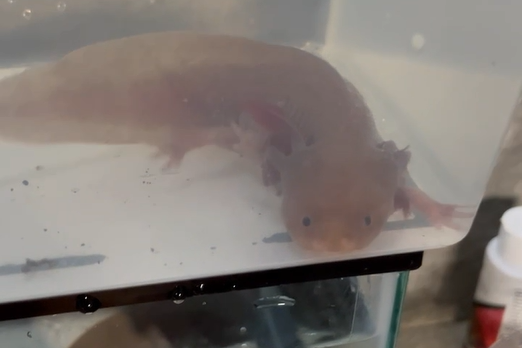
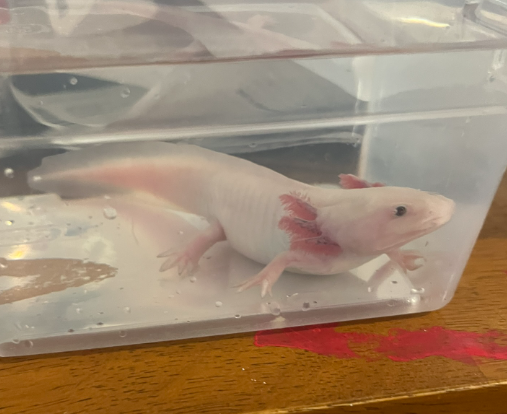
Kirby - (F) Lucy
-
![]()
Toothless - (M) Wild Type
-
![]()
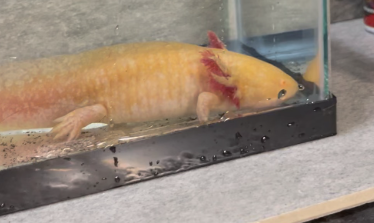
Nameless - (M) Golden Albino
-
![]()
Venom - (M) Melanoid
-
![]()
Dallon - (F) Golden Albino
-
![]()
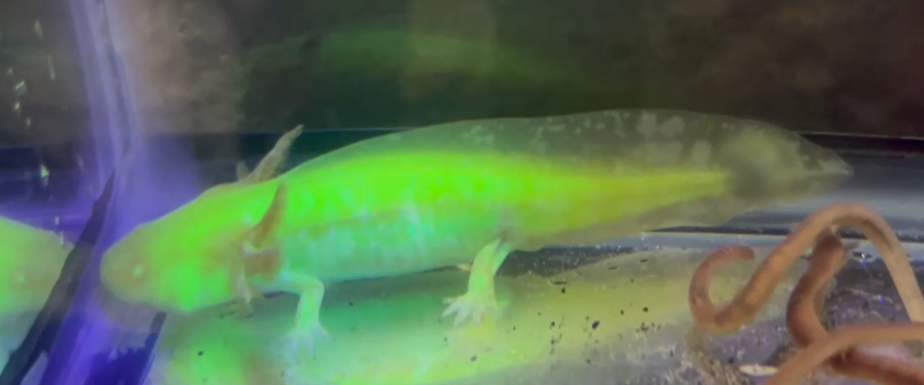
Jeff - (M) GFP Lucy
-
![]()
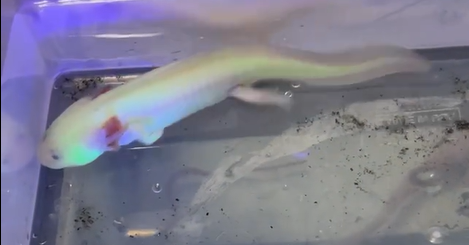
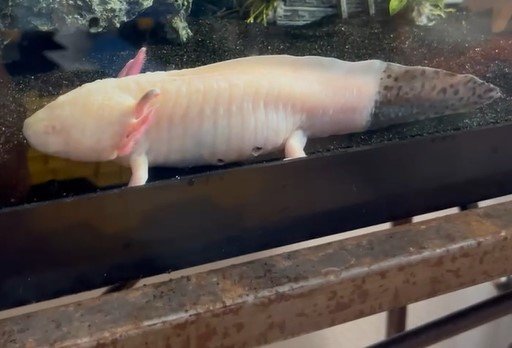
Evangaline - (F) Firefly (White Albino/Wild Type)
-
![]()
Sam - GFP Golden Albino
-
![]()
Tad - (M) Copper
-
![]()
Avril - (F) Lucy
-
![]()
Sage - GFP Wild Type
-
![]()
Maleficent - (F) Melanoid
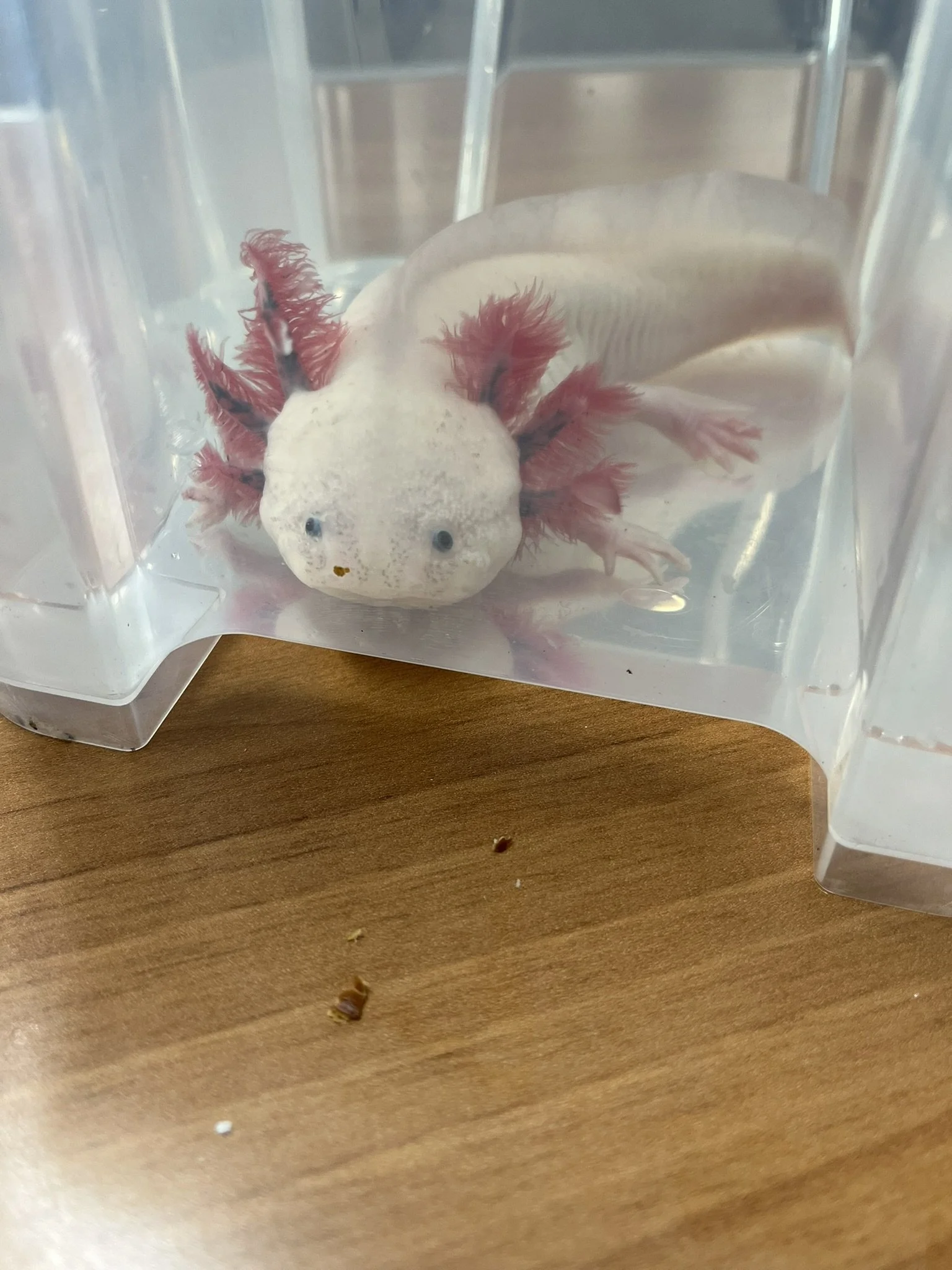
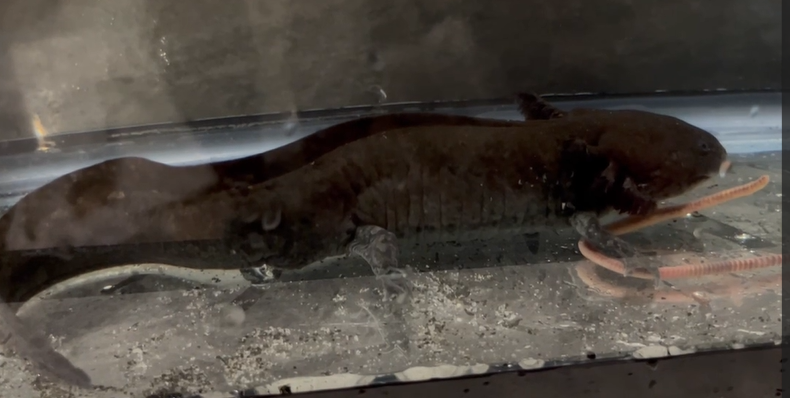
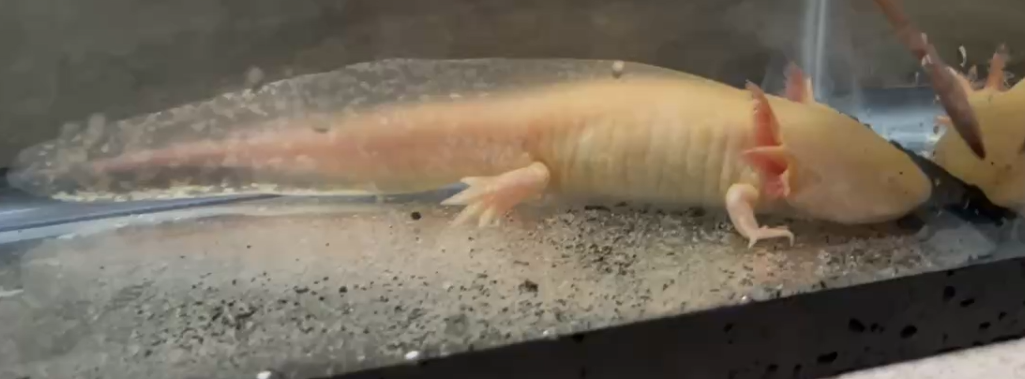
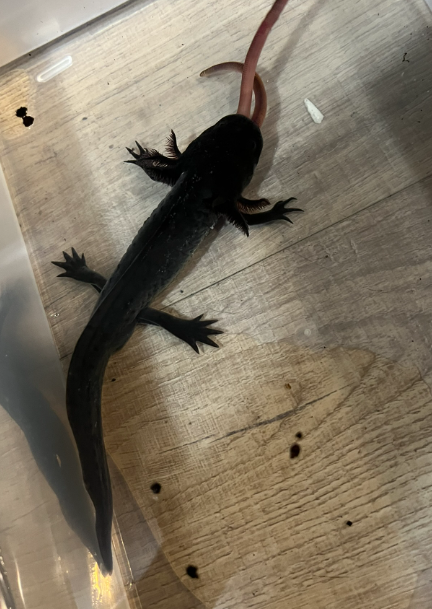


LIKE -COMMENT - SUBSCRIBE
Welcome to the Maniacal Threadz Exotics YouTube universe — a blend of solid axolotl education, creative storytelling, and behind-the-scenes magic from Jay and the Axolotl Army.
Here you’ll find everything from beginner care and morph explanations to tank builds, regeneration science, and the creation of the Axolotl Tarot deck.
Every episode is designed to teach, inspire, and make the aquatic world feel a little more accessible and a lot more magical.
Watch the latest video or jump into a playlist to start exploring.

Axolotl Morph Library
-
![]()
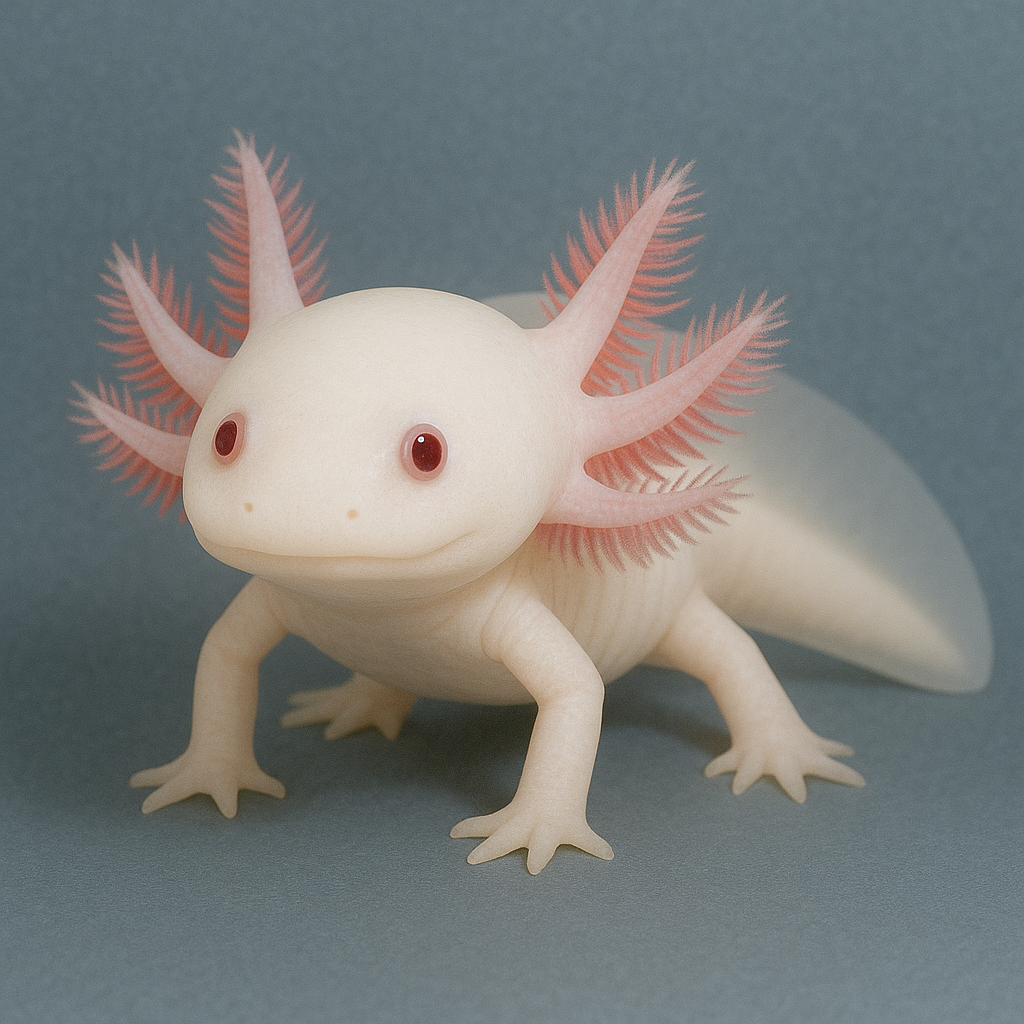
Leucistic
Description:
Soft pink/white body with dark eyes and cute blushy cheeks; the classic “Pinterest axolotl.”Genetics:
Leucistic (white) phenotype caused by pigment reduction in the skin; still has dark eyes. Often written as leucistic (L/L) with normal melanin in the eyes.Rarity:
Common in the hobby, very popular with new keepers. -
![]()
Albino
Description:
White or pale yellow body with red or pink eyes. Lacks dark pigment entirely.Genetics:
Recessive albino gene; no melanin in skin or eyes. Often combined with other traits (like GFP or copper).Rarity:
Common–uncommon depending on line and combos. -
![]()
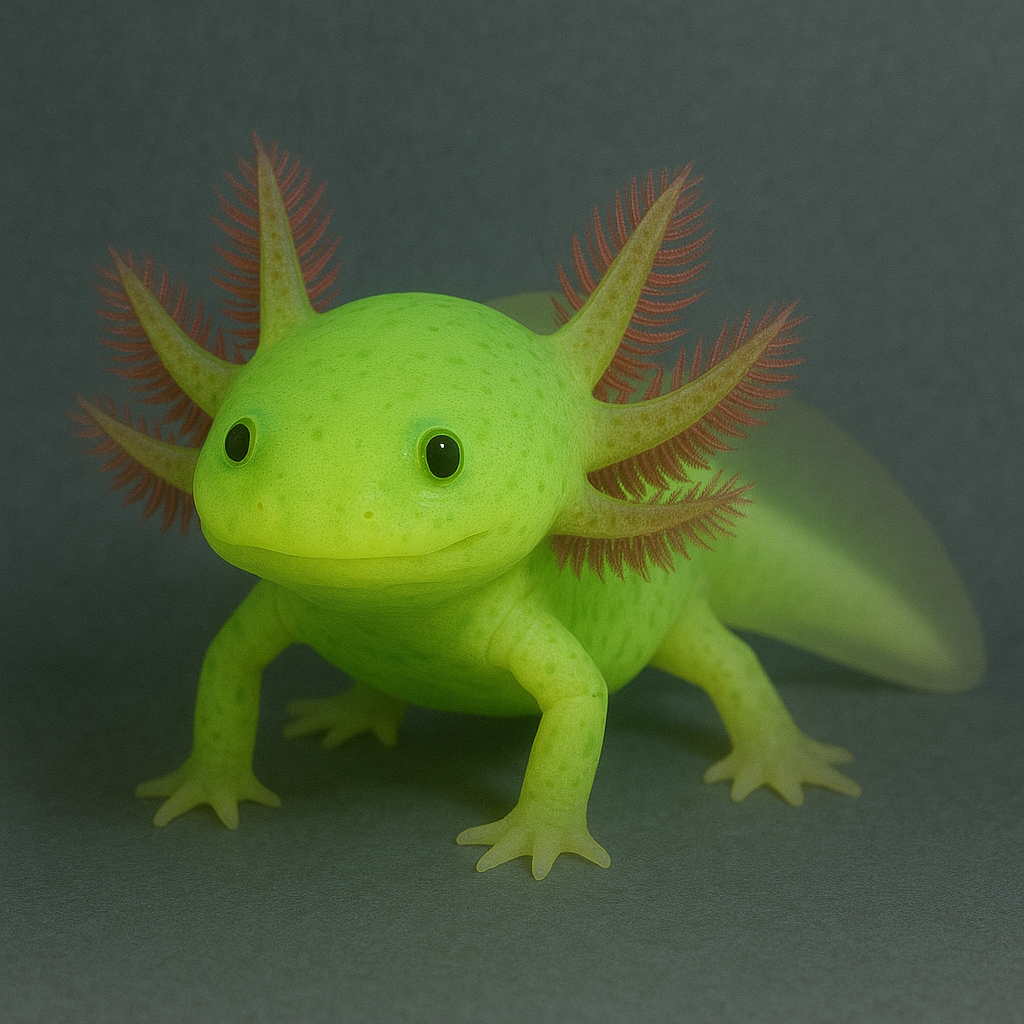
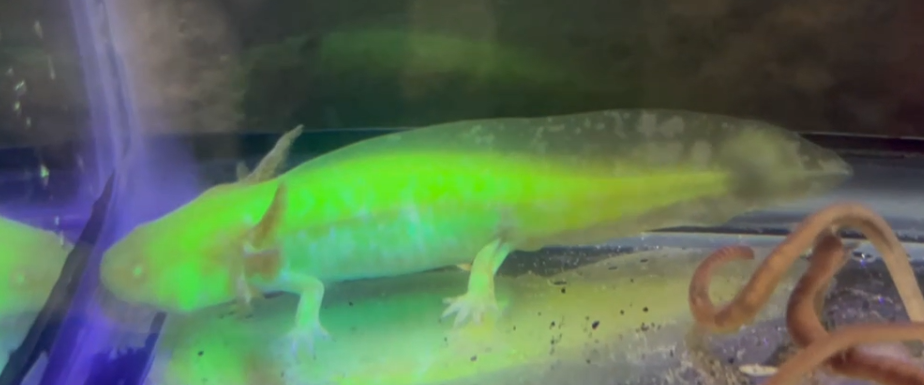
GFP (Green Fluorescent Protein)
Description:
Axolotl that glows neon green under blue/UV light, but looks mostly normal under regular lighting.Genetics:
Carries a GFP transgene inserted in the genome; can be combined with any color morph (GFP leucistic, GFP wild, etc.).Rarity:
Very popular and widely available, but still “special” to new keepers. -
![]()
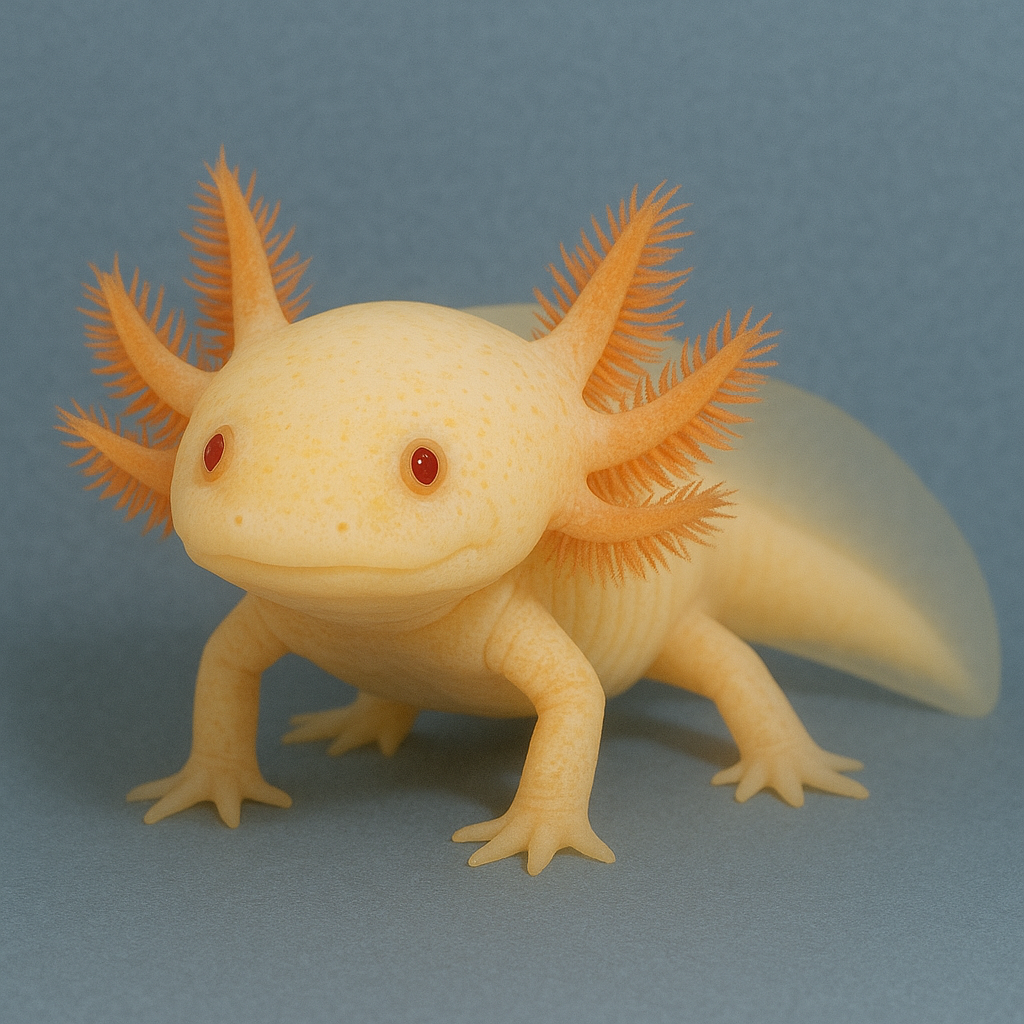
Golden Albino
Description:
Warm golden/yellow body, often with sparkles and red gills; eyes usually light or ruby.Genetics:
Albino base with increased yellow/xanthic pigment; no dark melanin.Rarity:
Common–uncommon; a staple morph in many collections. -
![]()
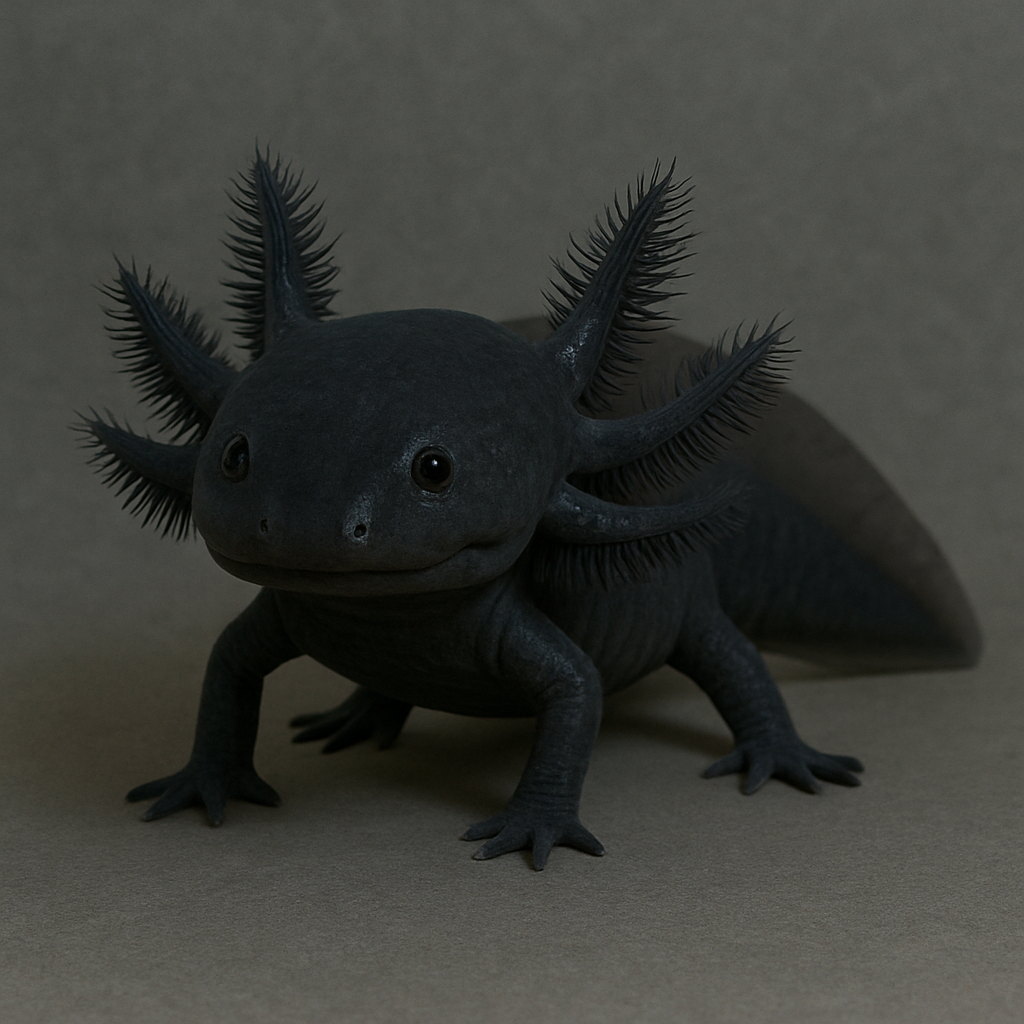
Melanoid
Description:
Deep, velvety color (often very dark), with reduced iridescence and no shiny speckles. Eyes are dark and flat-looking (no shiny ring).Genetics:
Recessive melanoid gene reduces reflective/iridophore pigment; can appear in black, dark brown, or even lighter combos.Rarity:
Uncommon alone, rarer in fancy combos (melanoid axanthic, melanoid copper, etc.).Description goes here -
![]()
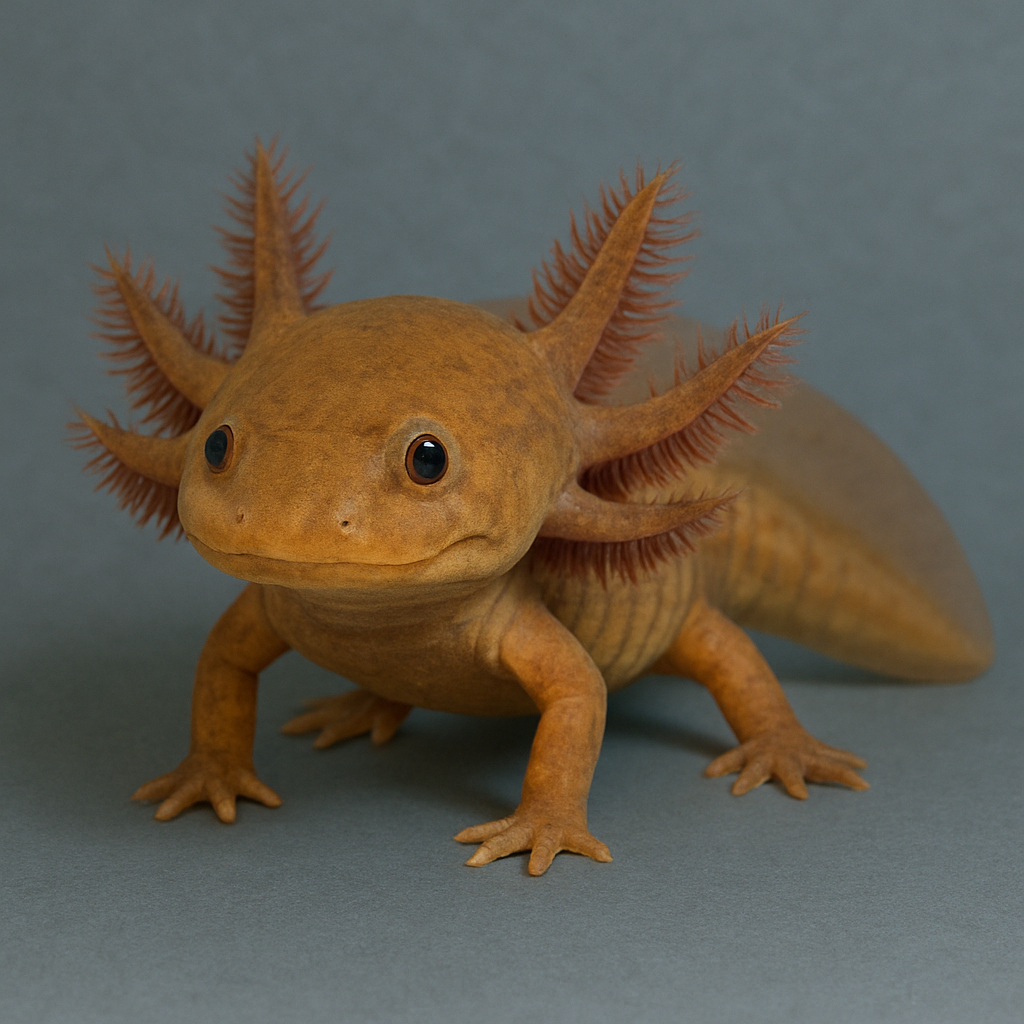
Copper
Description:
Soft brown, tan, or caramel body with grey or light eyes; often has a “coppery” speckled look.Genetics:
A form of albino with altered melanin production; specific copper alleles reduce dark pigment but don’t fully erase it.Rarity:
Uncommon; more sought-after in some regions and in combos. -
![]()
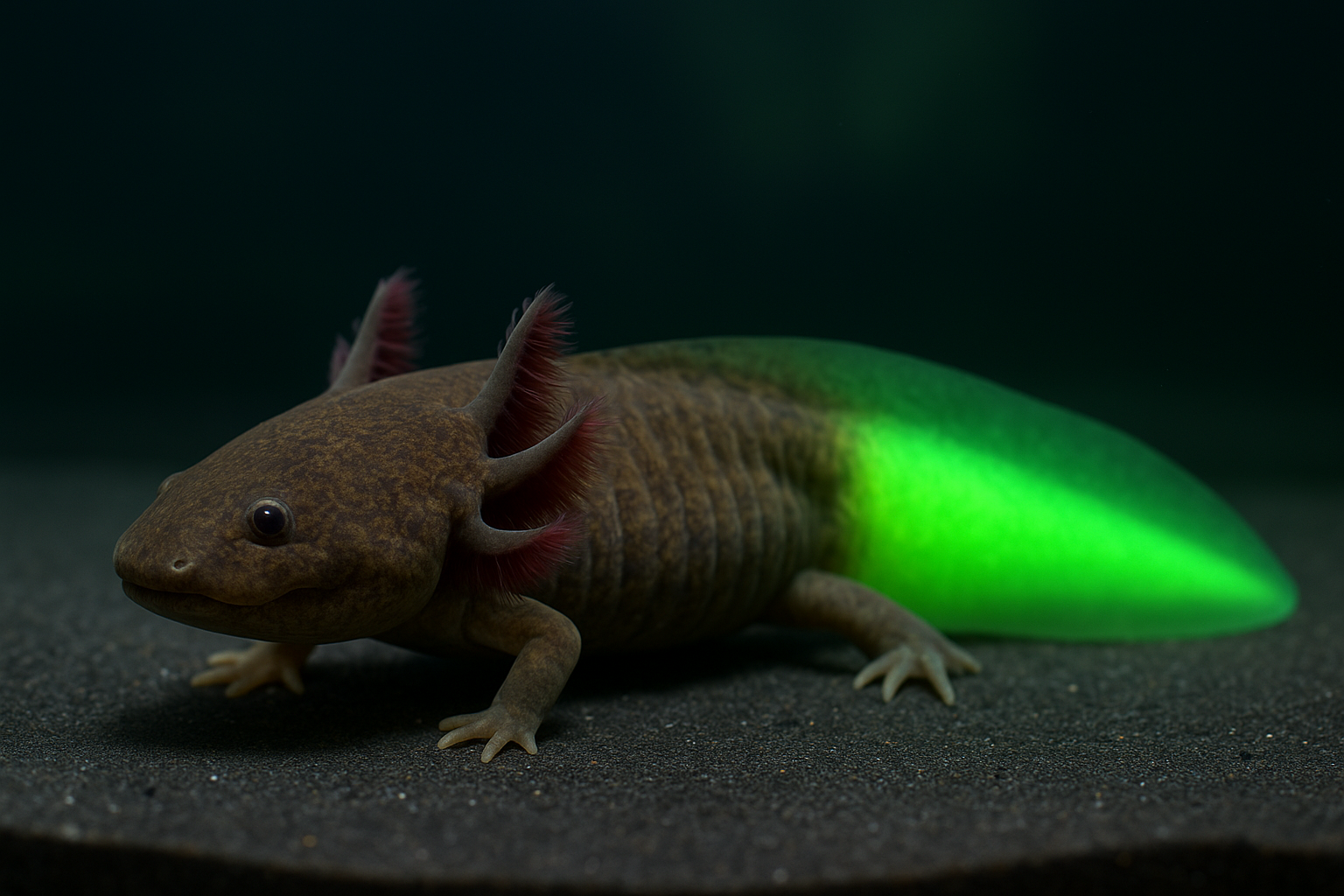
Firefly
Description:
Body is one color, tail tip or back half is a contrasting color, like it’s glowing. Often looks “dipped” or “split.”Genetics:
Created through surgical blastomere/graft techniques (not a simple inheritable morph). Pattern comes from lab manipulation, not typical breeding.Rarity:
Extremely rare and ethically controversial; true Fireflies are limited and expensive. -
![]()
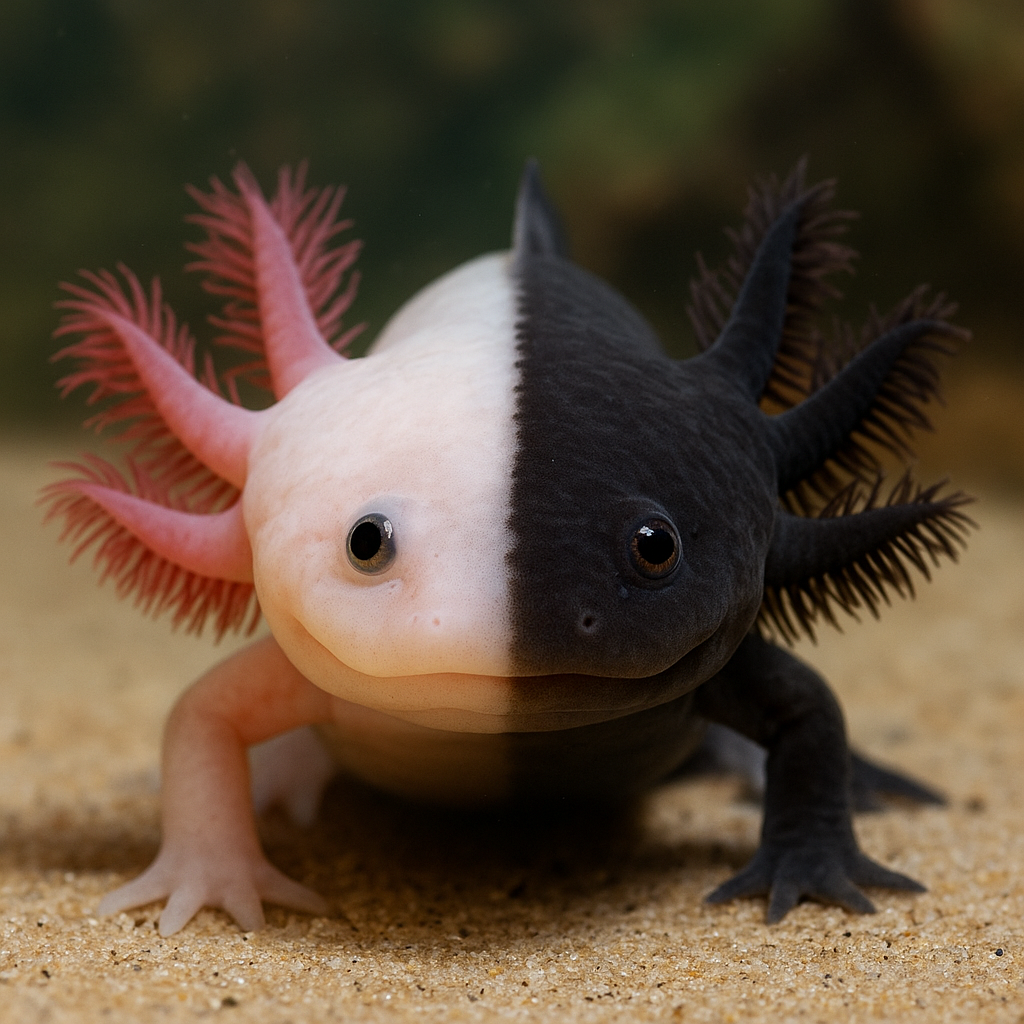
Chimera
Description:
Sharp half-and-half axolotl: one side of the body/mask one morph, the other side a completely different morph.Genetics:
Two embryos fuse early in development, creating an animal with two sets of DNA. Not a predictable or reliably inheritable morph.Rarity:
Ultra rare; often one-of-a-kind animals. -
![]()
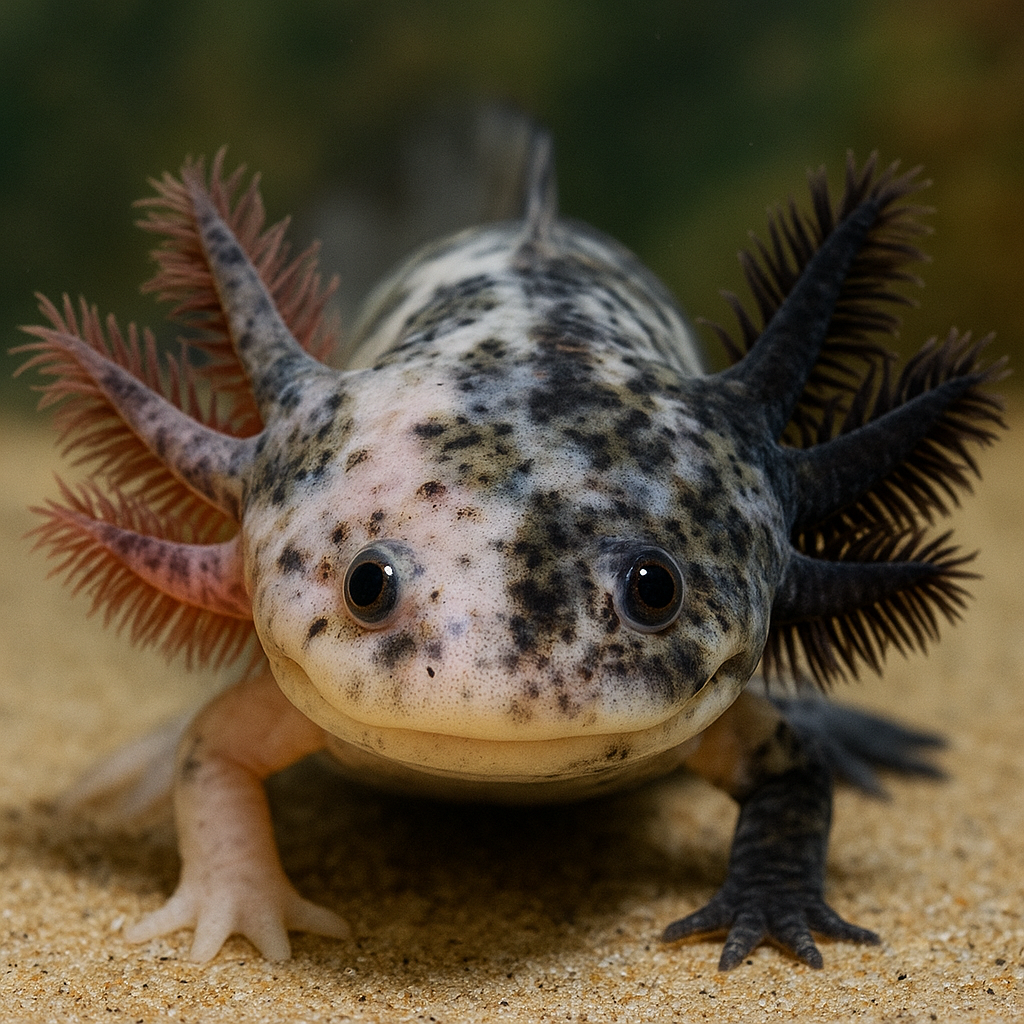
Mosaic
Description goes hereDescription:
Wild paint-splatter or marbled pattern; patchy mixes of colors with no clean line down the middle.Genetics:
Like chimeras, mosaics involve multiple cell lines, but patterns are more scattered. Not a stable, breed-true morph.Rarity:
Very rare; each mosaic is completely unique. -
![]()
Hypomelanistic
Description:
“Washed-out” version of a darker morph. Softer, lighter colors with reduced melanin, but not fully albino.Genetics:
Hypomelanism reduces dark pigment rather than removing it. Can occur over wild, melanoid, or other bases.Rarity:
Uncommon; often seen in specific breeding projects. -
![]()
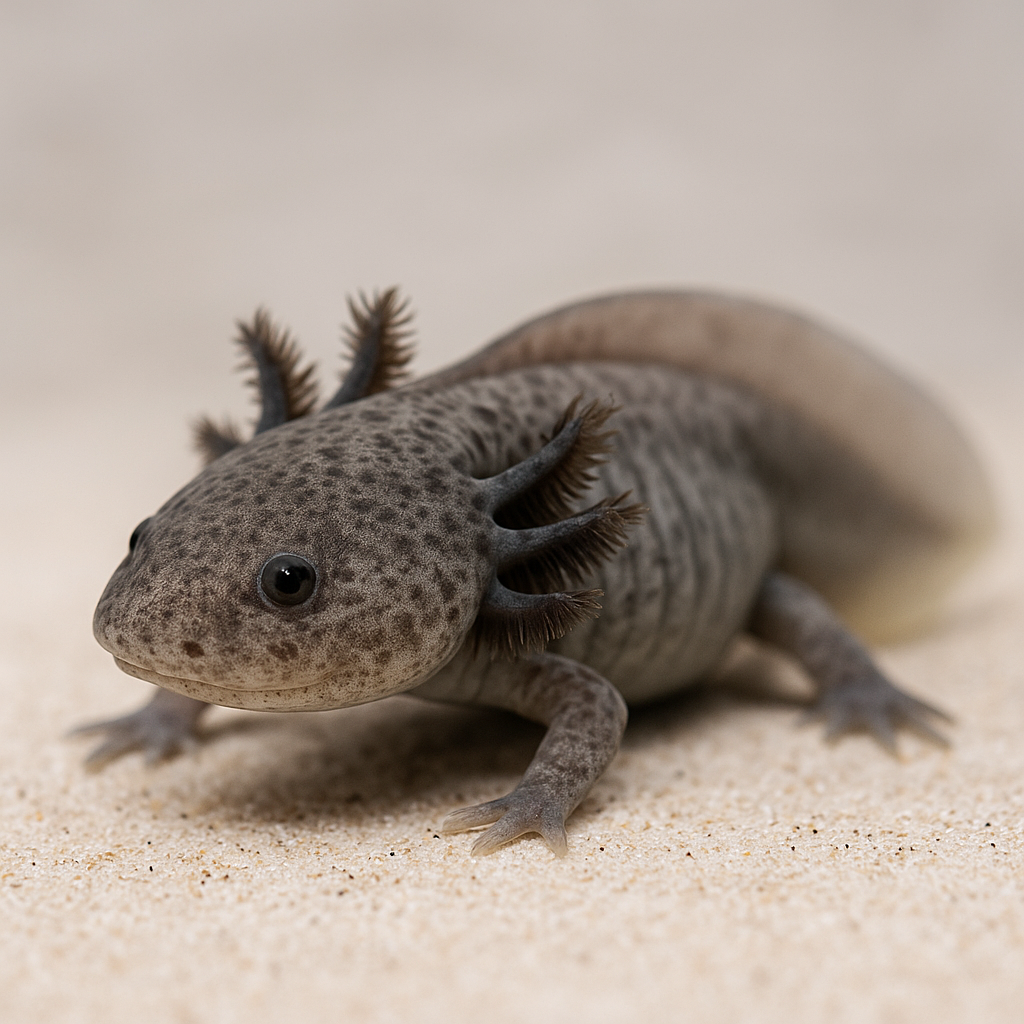
Axanthic
Description:
Cool-toned axolotl lacking yellow/orange pigment; often grey, blue-grey, or charcoal.Genetics:
Axanthism removes xanthophores (yellow pigment cells), leaving mainly black/white melanin. Can combine with melanoid, albino, etc.Rarity:
Uncommon–rare depending on line and combos. -
![]()
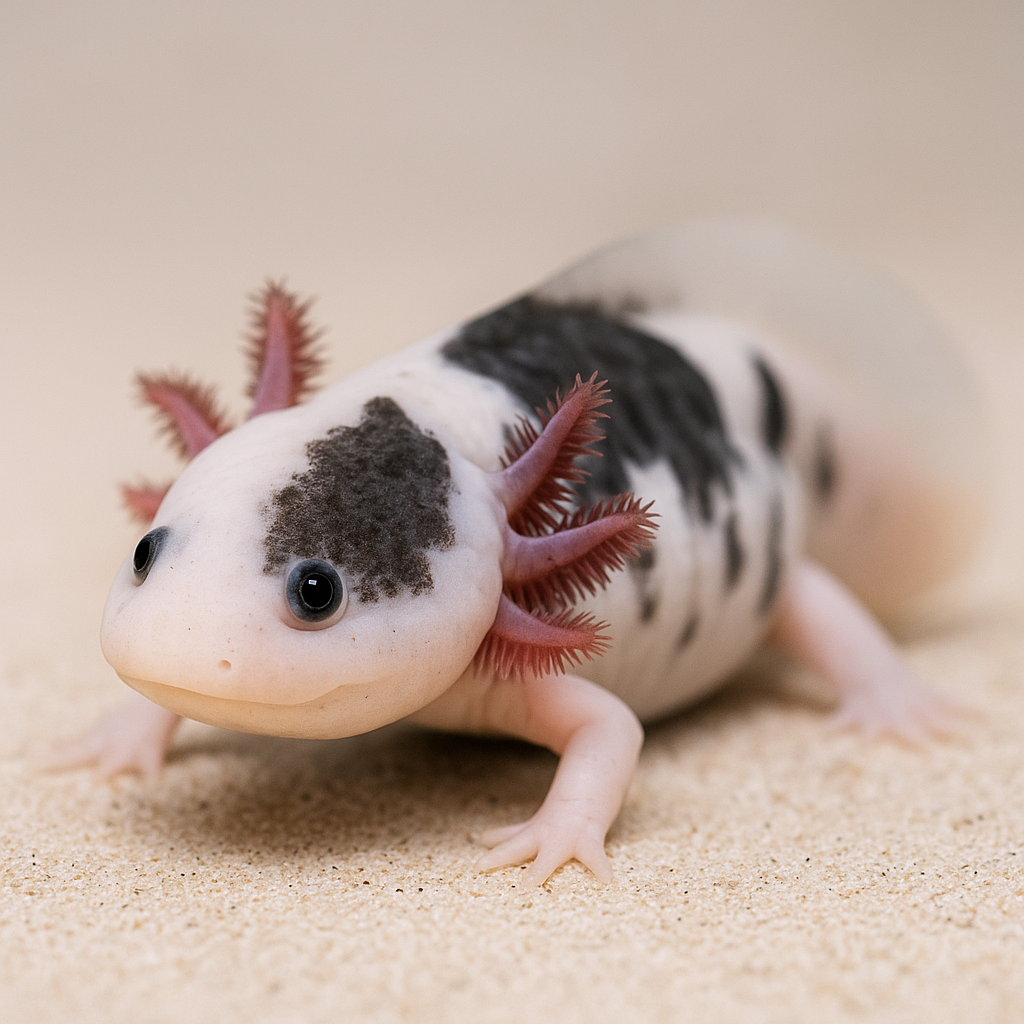
Piebald
Description:
Striking high-contrast patches of dark pigment on a light body, usually concentrated on the head and along the back.Genetics:
Thought to be related to localized pigment cell over-expression and pattern mutations; not fully understood and doesn’t always breed true.Rarity:
Rare; strong, stable piebald patterning is highly prized. -
![]()
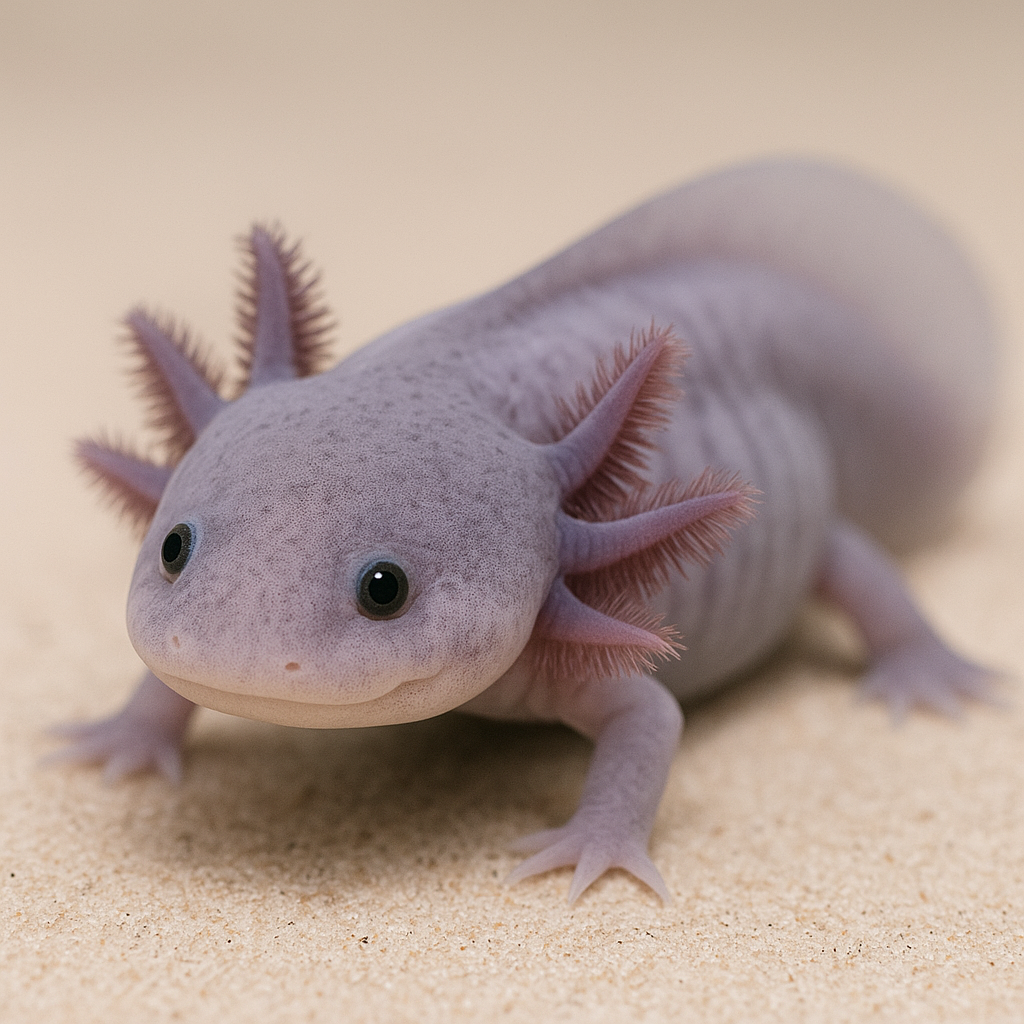
Lavender
Description:
Soft pastel grey or light purple-toned axolotl; often with subtle speckling.Genetics:
Usually a combination of multiple traits affecting melanin and iridophores; line-dependent, not a single simple gene.Rarity:
Uncommon–rare and very “collector-bait.” -
![]()
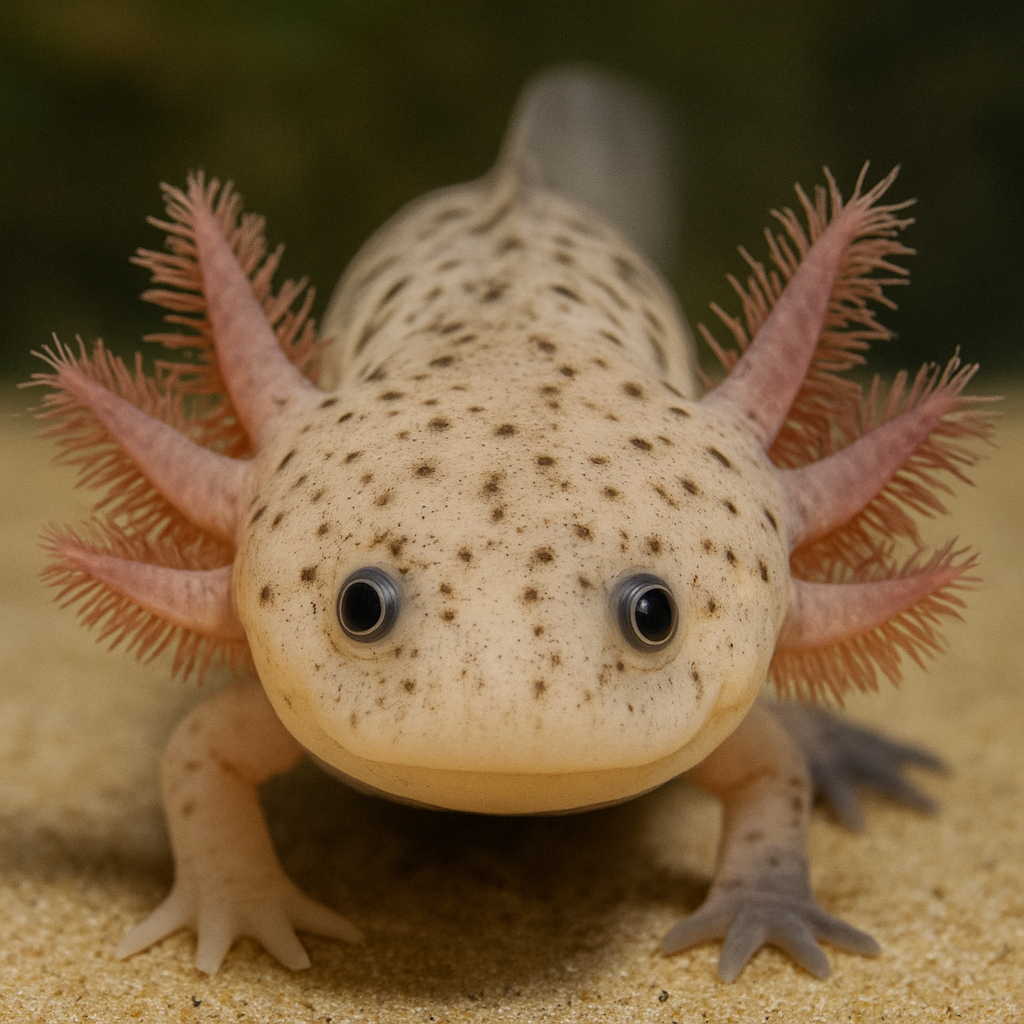
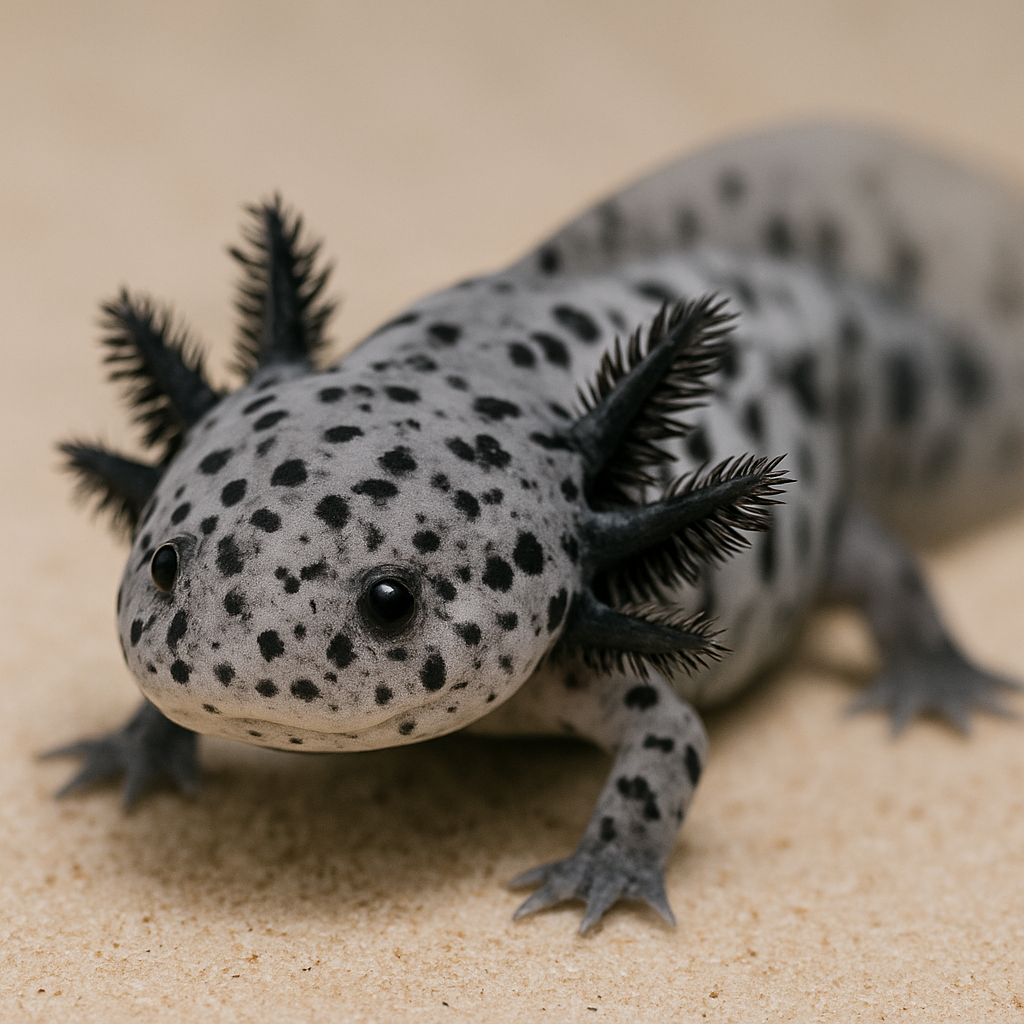
Silver Dalmation
Description:
Light body (often lavender or pale) with dark “freckle” spotting, like a dalmatian. Spots can be sparse or heavily clustered.Genetics:
Likely polygenic (multiple genes) influencing spotting and pigment distribution. Frequently appears in specific selectively bred lines.Rarity:
Rare; high-contrast, heavily spotted animals are especially sought after.
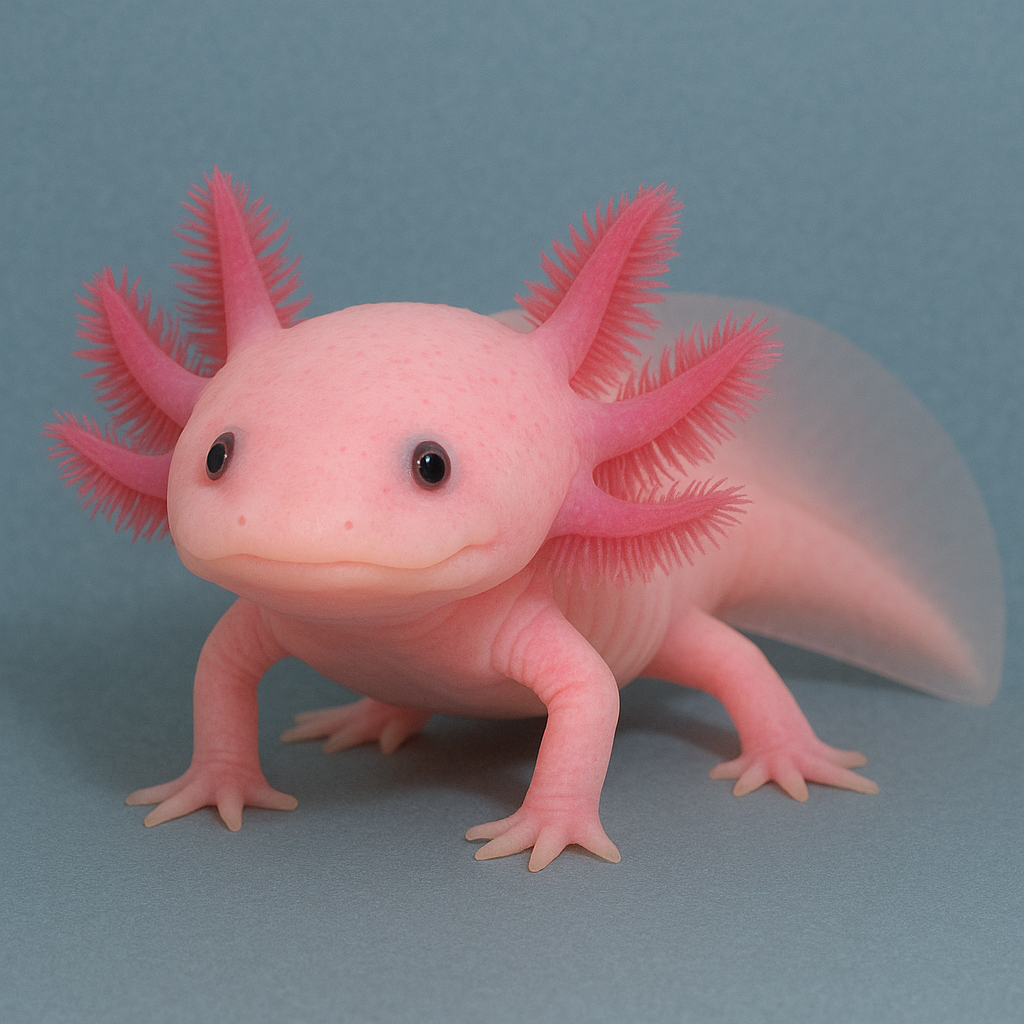

Axolotls Currently Available for Adoption
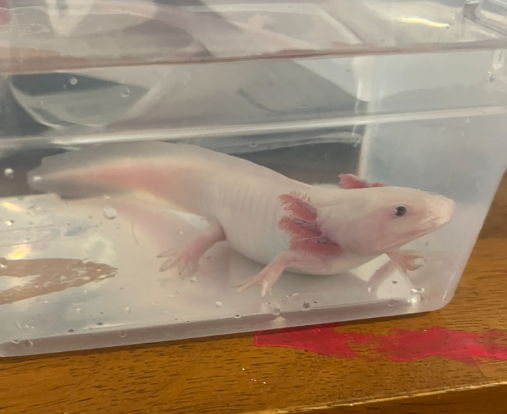
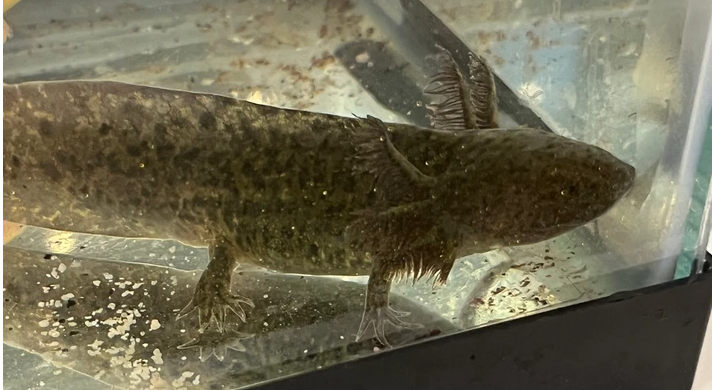
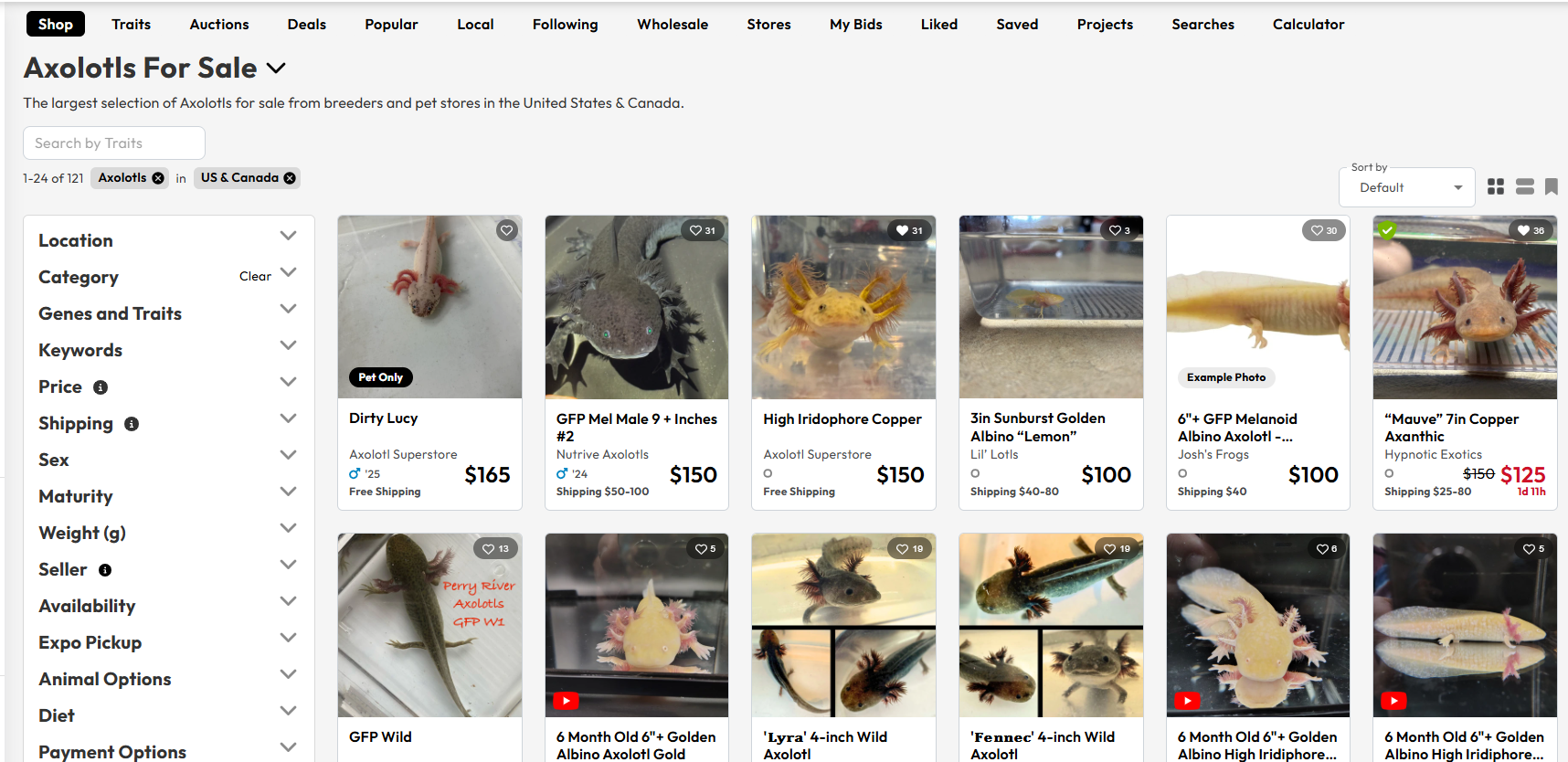
We partner with MorphMarket, a leading online platform for responsibly bred exotic animals. This partnership helps ensure transparency, ethical standards, and informed placements by connecting keepers with clear lineage information, care expectations, and educational resources. By working within an established marketplace built around accountability and community standards, Maniacal Threadz prioritizes animal welfare, education, and long-term success for both axolotls and their keepers.


Logistics, Payments & Shipping
Payments and adoptions are coordinated through MorphMarket using approved payment methods and platform messaging. Initial inquiries should be made through the MorphMarket chat, where the adoption process is formally handled. Once an adoption is confirmed, an invoice will be issued via PayPal to complete payment.
Axolotls are shipped exclusively via FedEx Express Overnight using insulated, temperature-controlled packaging designed for live animals. Shipments are scheduled Monday through Wednesday only to ensure safe transit and avoid weekend delays. All shipping is a flat rate of $50, which includes materials and overnight delivery. Once payment is received, a tracking number will be provided. Customers are kindly asked to leave a review following safe arrival, as prompted through the MorphMarket platform.
State Restrictions
Due to state regulations, axolotl adoptions cannot be completed in the following U.S. locations where ownership is restricted or prohibited:
California, Maine, New Jersey, New Mexico, and Hawaii
Availability is automatically reflected on MorphMarket in accordance with these regulations.
Post-Adoption Support & Counseling
Maniacal Threadz follows a strict care-first adoption policy and remains available to adopters well beyond delivery. Post-adoption support includes personalized care guidance, routine follow-up check-ins, and responsive customer service to help ensure a smooth transition into the axolotl’s new home. We offer ongoing assistance with acclimation, feeding, habitat adjustments, and general husbandry questions, providing adopters with continued support and education after placement.


12/10/2025, experimentpdx said: Quick, thorough communication, answered all my questions. Beautiful axolotl!!!
12/10/2025, experimentpdx said: Quick, thorough communication, answered all my questions. Beautiful axolotl!!!
Axolotl Care 101:
How We Build This So It’s Actually Helpful
Axolotls are fascinating, resilient, and truly unique aquatic animals, which is exactly what makes them so special. They are also a more advanced species to care for, requiring stable water conditions, cool temperatures, and attentive long-term maintenance.
Axolotl Care 101 exists to help set realistic expectations and provide a clear foundation for responsible care.
Understanding their needs before bringing one home is essential to their health, longevity, and overall well-being.
Purpose of this section
Educate before adoption
Filter out impulse buyers without shaming
Give serious keepers confidence
Reduce post-adoption emergencies and inbox chaos
-
Axolotls require spacious, stable environments to thrive. Proper tank size and setup are foundational to their health and longevity.
Recommended Tank Size
Minimum 20-gallon long tank for one adult axolotl
Add +10 gallons for each additional axolotl
Long tanks are preferred over tall tanks for floor space and oxygen exchange
Tank Setup Essentials
Fully aquatic, freshwater aquarium only
Secure lid to prevent escapes and reduce evaporation
Low to moderate water flow to avoid stress
Gentle filtration with minimal current
Filtration
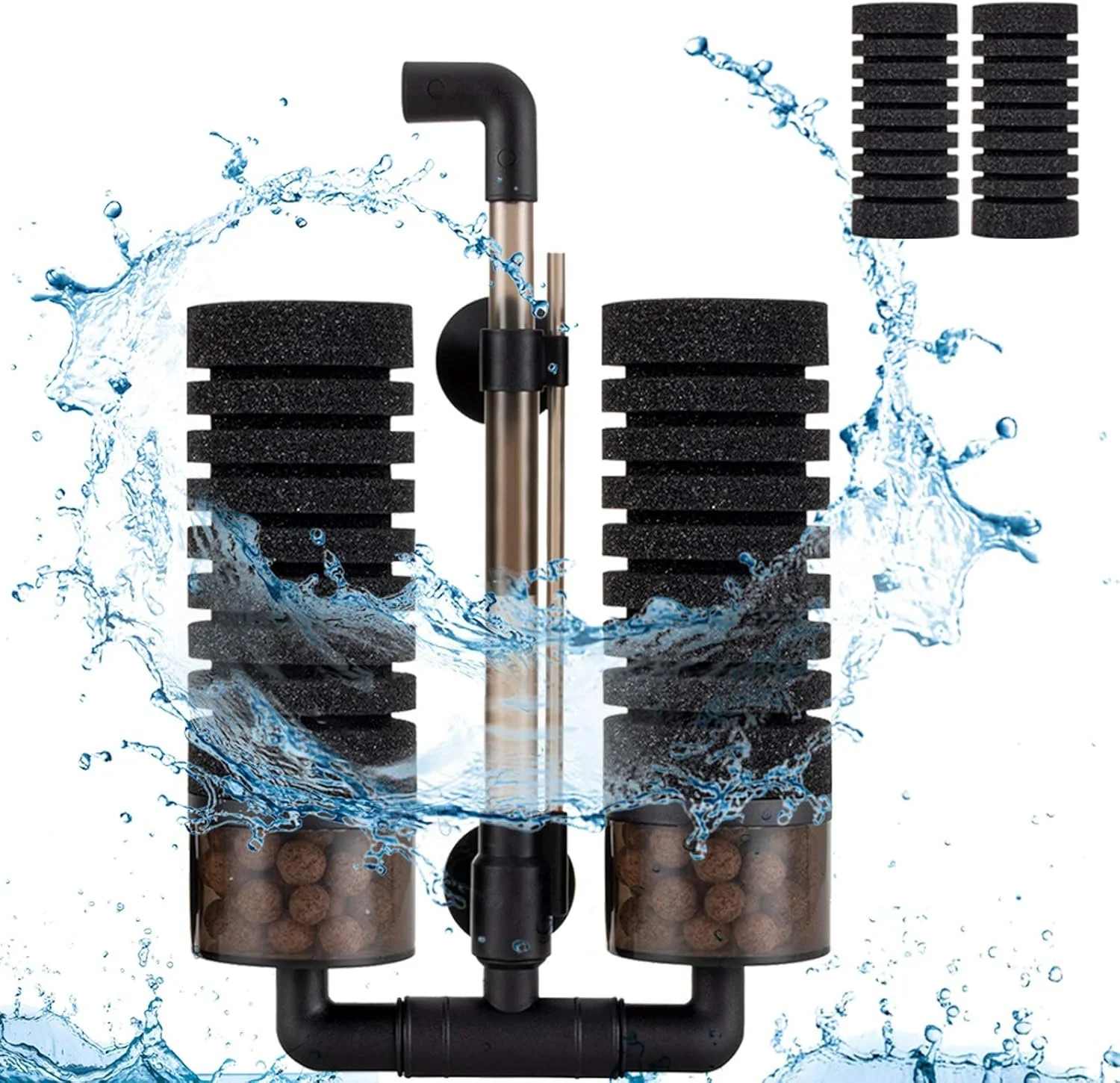
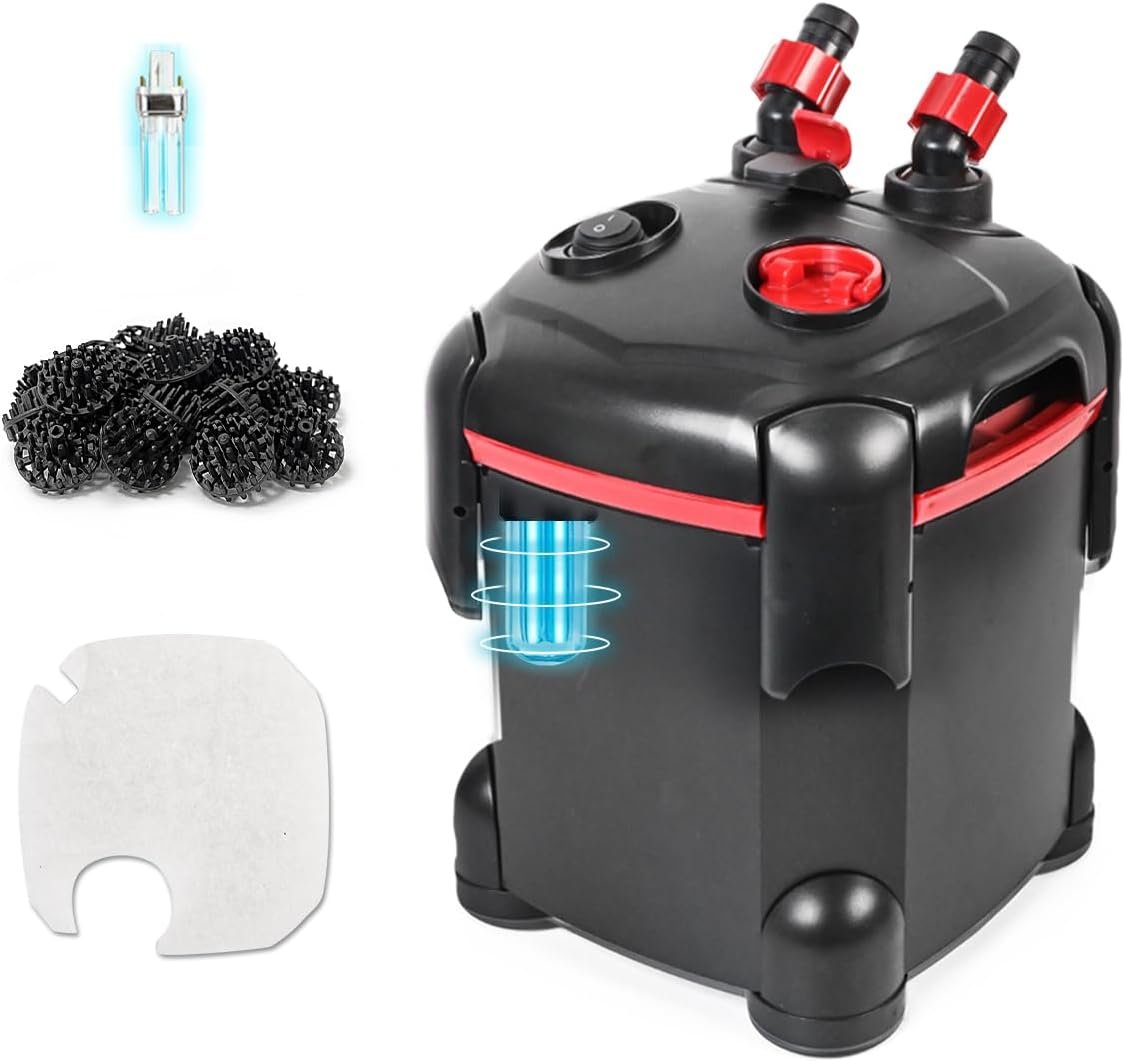
Sponge filters or low-flow canister filters recommended
Avoid strong currents or spray bars aimed directly into the tank
Filter should be fully cycled before introducing an axolotl
Lighting
Axolotls do not require bright lighting
Low-light or ambient room lighting is sufficient
Provide hides to allow retreat from light
Hides & Environment
At least one hide per axolotl
Use smooth, aquarium-safe materials only
Provide open floor space for movement and resting
Important Notes
Bowls, nano tanks, and uncycled setups are not appropriate
Tank must be fully established before adoption
Stability is more important than aesthetics
-
Stable, clean water is the single most important factor in axolotl health. Axolotls are extremely sensitive to poor water quality, and an uncycled or unstable tank can quickly become fatal.
Ideal Water Parameters
Ammonia: 0 ppm (always)
Nitrite: 0 ppm (always)
Nitrate: Under 20 ppm (lower is better)
pH: 6.5–8.0 (stable matters more than exact)
Hardness: Moderate is preferred
The Nitrogen Cycle (Required)
Axolotl tanks must be fully cycled before introduction
Cycling establishes beneficial bacteria that convert waste into safer compounds
Cycling typically takes 4–8 weeks
Axolotls should never be used to “cycle” a tank
Testing & Monitoring
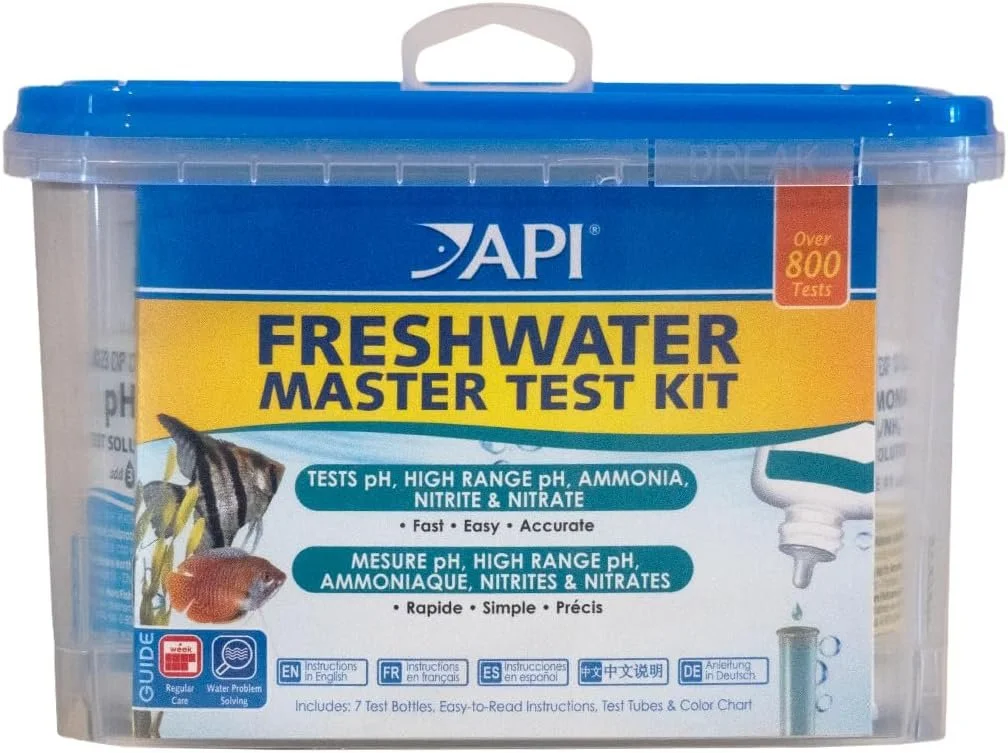
Use a liquid test kit for accuracy
Test water regularly, especially in new setups
Sudden changes in parameters can cause stress or illness
Water Changes
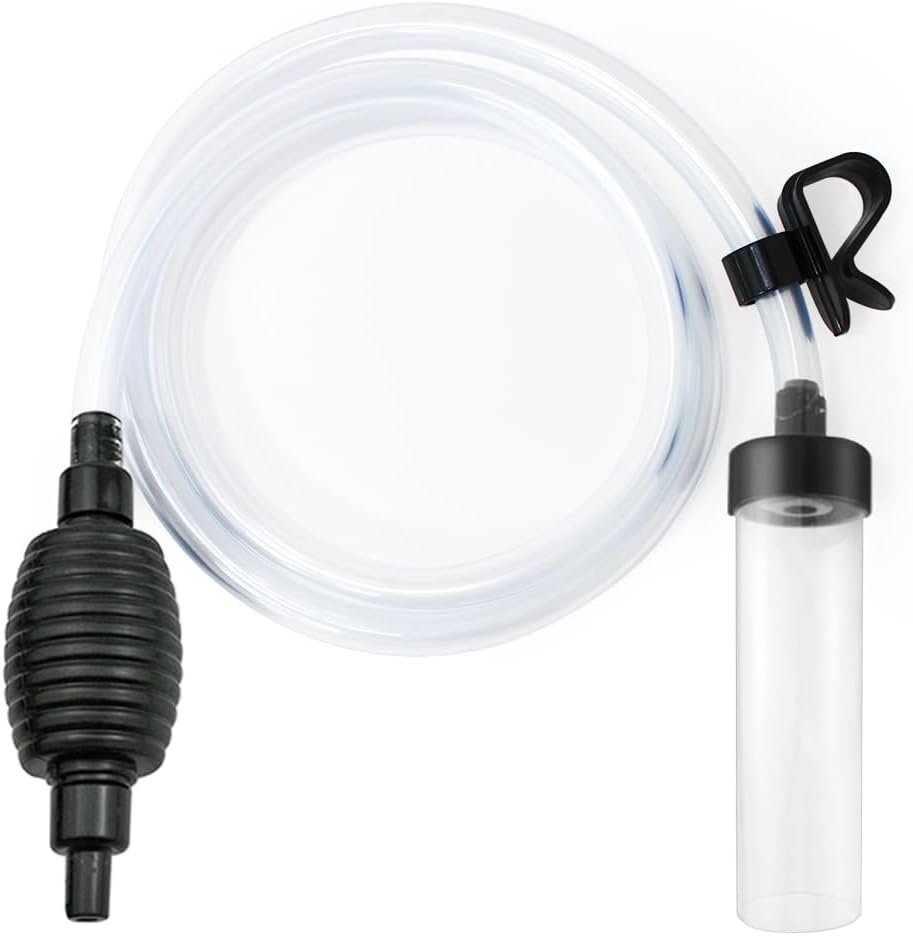
Perform regular partial water changes (20–30%)
Frequency depends on tank size, stocking, and filtration
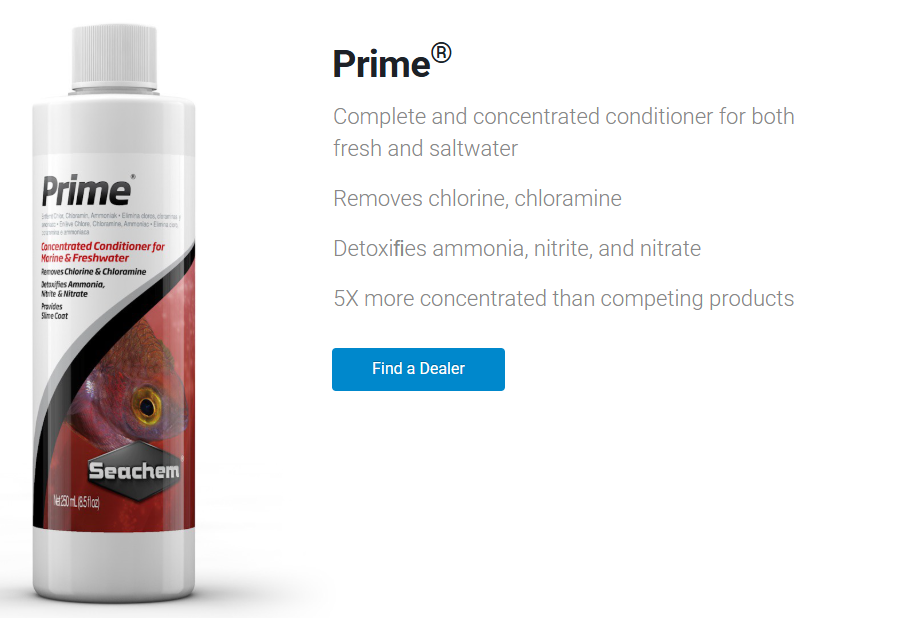
Always treat tap water with a dechlorinator
Match temperature closely to avoid shock
Common Water Quality Mistakes
Skipping the cycling process
Relying on strips instead of liquid tests
Overfeeding leading to ammonia spikes
Infrequent maintenance
Key Takeaway
Clear water does not mean clean water
Stable parameters matter more than perfection
Proper cycling is non-negotiable for axolotl care
-
Axolotls are cold-water amphibians, and temperature control is critical to their health. Prolonged exposure to warm water is one of the most common causes of stress, illness, and shortened lifespan in axolotls.
Ideal Temperature Range
60–68°F (16–20°C) is optimal
Short-term tolerance up to 70°F may occur, but is not ideal
Temperatures above 72°F are dangerous and can be fatal
Why Temperature Matters
High temperatures reduce oxygen levels in water
Heat increases metabolism, stress, and susceptibility to disease
Warm water accelerates harmful bacterial growth
Cooling Solutions
Aquarium chiller (most reliable option)
Cooling fans to promote evaporation
Frozen water bottles as a temporary measure
Climate-controlled room when possible
Heating Warnings
Heaters are not recommended
Axolotls do not require tropical temperatures
Sudden temperature changes can cause shock
Monitoring
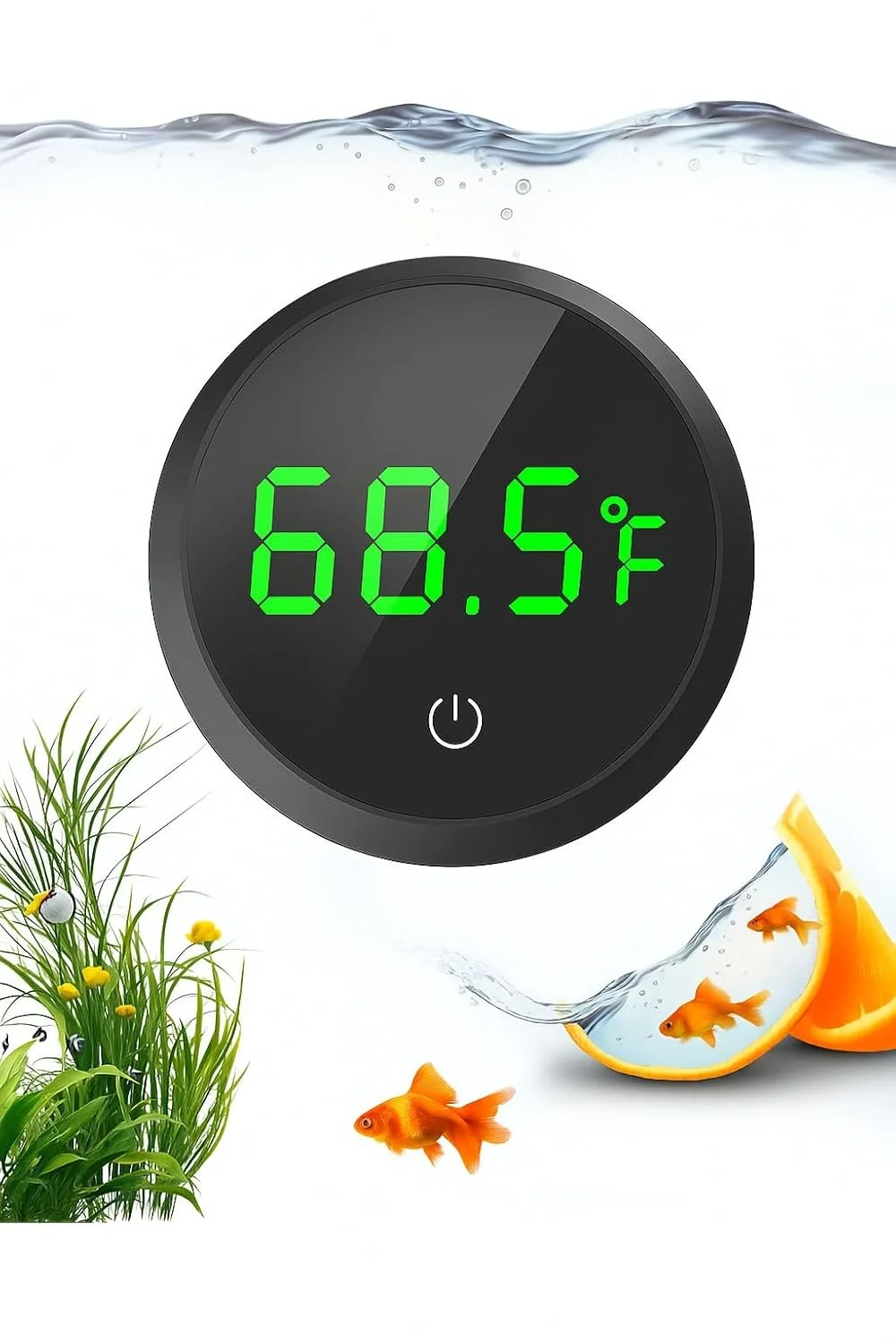
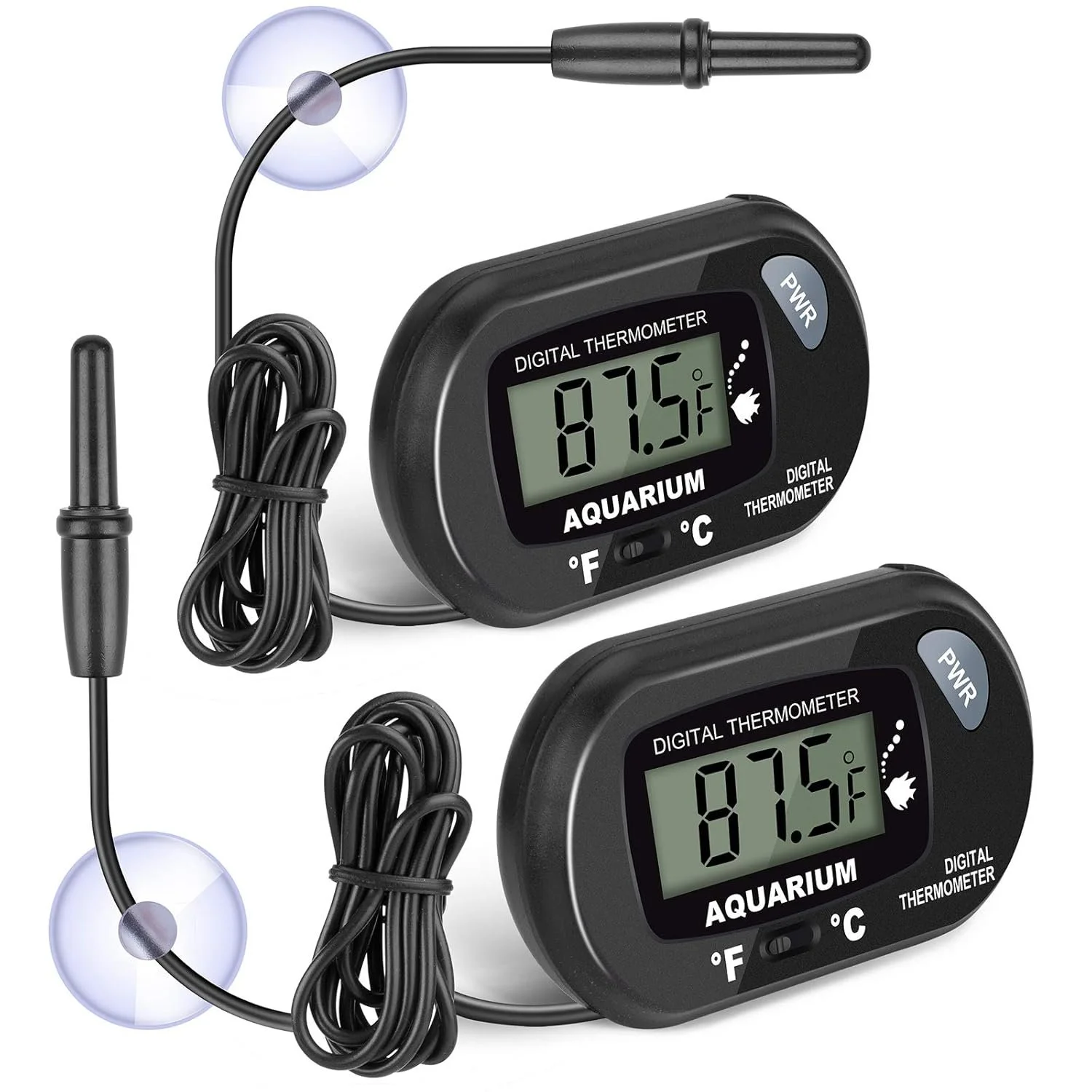
Use a reliable digital thermometer
Monitor daily, especially during warmer months
Have a heat-response plan in place before adoption
Key Takeaway
Cool, stable water is essential
Temperature stability matters more than short-term fluctuations
If you cannot maintain proper temperatures, axolotls may not be a suitable species
-
Proper nutrition is essential for axolotl growth, immune health, and longevity. Axolotls are carnivorous and require a diet that meets their specific nutritional needs.
Primary Diet
High-quality axolotl or salamander pellets
Earthworms or nightcrawlers (appropriately sized)
Soft, protein-rich foods designed for aquatic amphibians
Feeding Frequency
Juveniles: once daily
Adults: 2–3 times per week
Portion size should be appropriate to body size and age
Foods to Avoid
Feeder fish (risk of parasites and injury)
Freeze-dried foods as a primary diet
Fatty meats or human food
Insects with hard exoskeletons
Feeding Tips
Remove uneaten food promptly to protect water quality
Observe feeding behavior for signs of stress or illness
Consistent appetite is a key health indicator
Supplementation
A balanced diet typically does not require supplements
Over-supplementation can be harmful
Key Takeaway
Quality matters more than variety
Overfeeding is more harmful than underfeeding
Clean feeding practices protect both health and water quality
-
Axolotls explore their environment with their mouths, which makes substrate and décor choices critically important. Unsafe materials can cause impaction, injury, or long-term health issues.
Safe Substrate Options
Bare-bottom tanks (easiest to maintain and safest)
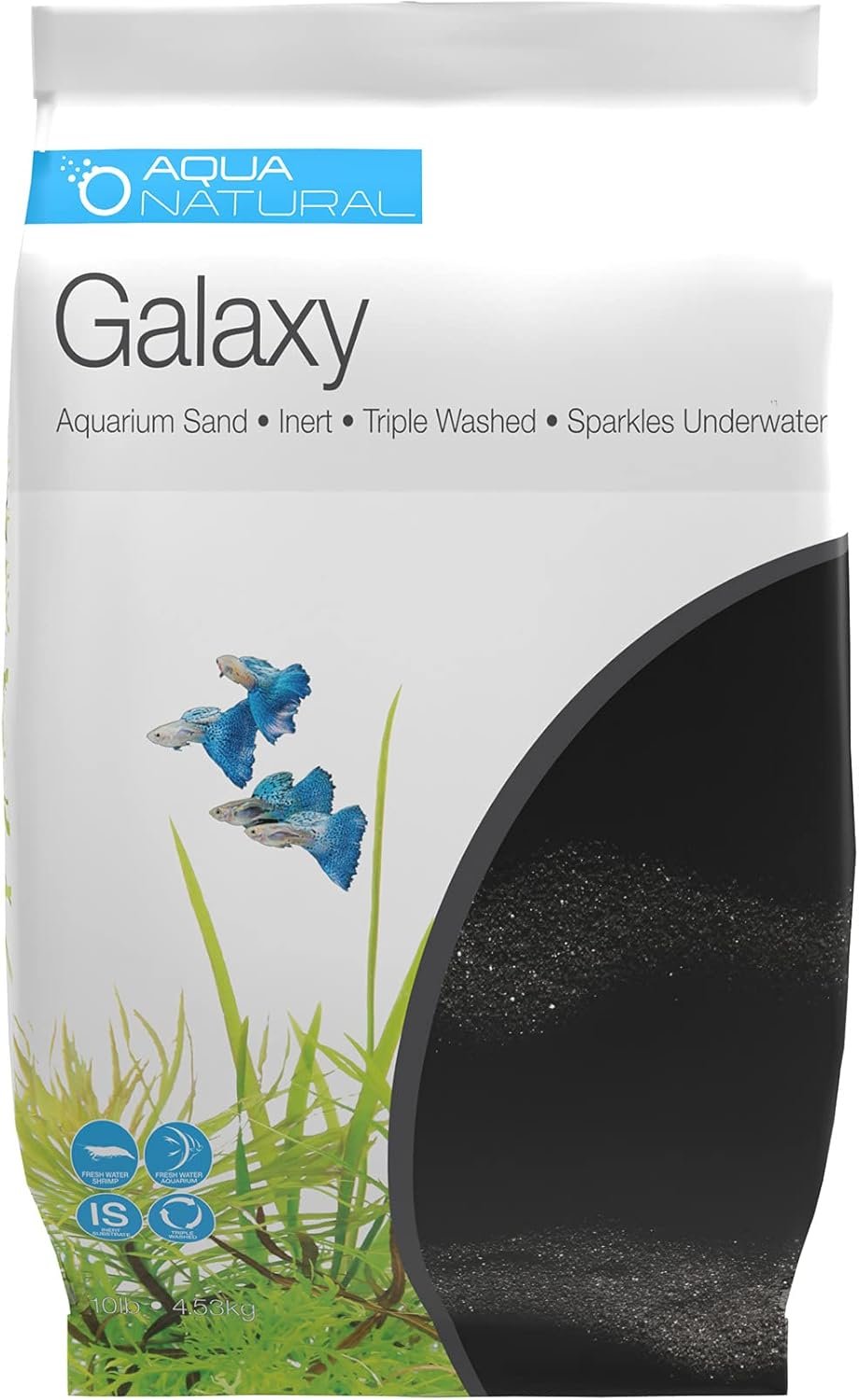
Fine sand only, once axolotls are large enough
Smooth slate or tile placed securely
Unsafe Substrates
Gravel or pebbles of any size
Decorative stones that can fit in the mouth
Sharp or rough materials
Glass marbles
Decor Guidelines
All décor should be smooth, stable, and aquarium-safe
Avoid sharp edges or narrow openings
Secure heavy items to prevent shifting or collapse
Choose materials that will not leach chemicals
Plants
Live plants may be used if tolerant of cold water
Silk or soft artificial plants are acceptable
Avoid plastic plants with sharp edges
Hides
At least one hide per axolotl
Openings should allow full entry without scraping
Dark, enclosed spaces reduce stress
Key Takeaway
If it fits in the mouth, it can be swallowed
Safety always outweighs aesthetics
Simple setups are often the healthiest
-
Axolotls are best kept either alone or with other axolotls under carefully controlled conditions. Most tank mates pose a risk due to biting, stress, or water parameter incompatibility.
Safest Option
Species-only tank
Axolotls of similar size housed together with ample space and hides
Axolotl-to-Axolotl Considerations
House only axolotls of similar size
Never mix juveniles with adults
Monitor closely for nipping or aggression
Separate immediately if injuries occur
Tank Mates to Avoid
Fish of any kind (fin nipping, parasites, stress)
Snails (impaction risk)
Shrimp (may be eaten and can impact water quality)
Other amphibians or reptiles
Why Tank Mates Are Risky
Axolotls have poor eyesight and may bite accidentally
Stress increases susceptibility to illness
Many species require warmer water than axolotls can tolerate
Key Takeaway
Axolotls are not community tank animals
“Peaceful” fish are not safe tank mates
When in doubt, house separately
-
Healthy axolotls are active, alert, and have full, feathery gills. Subtle changes in behavior or appearance are often the first signs that something in the environment needs attention.
Signs of a Healthy Axolotl
Smooth skin with no sores or lesions
Gills that are full and feathery
Regular appetite
Calm but responsive behavior
Common Signs of Stress
Gills curled forward
Loss of appetite
Excessive floating or lethargy
Frequent attempts to escape the tank
Common Health Issues
Fungal infections (often linked to poor water quality)
Gill damage from high flow or tank mates
Impaction from unsafe substrate
Heat stress from elevated temperatures
Prevention
Maintain stable water parameters
Keep temperatures within the safe range
Perform regular water changes
Avoid overcrowding and unsafe décor
When to Take Action
Test water parameters immediately if behavior changes
Address environmental issues first
Seek an exotic veterinarian if symptoms persist
Key Takeaway
Most health issues are preventable with proper care
Axolotls show stress before serious illness develops
Early intervention makes a significant difference
-
Axolotls are long-lived aquatic animals that require consistent care over many years. Bringing one home is a long-term responsibility, not a short-term project.
Lifespan
Axolotls commonly live 10–15 years with proper care
Their needs remain consistent throughout their life
Ongoing Care Requirements
Regular water testing and maintenance
Routine partial water changes
Temperature monitoring year-round
Consistent feeding and observation
Time & Attention
Daily visual health checks
Weekly maintenance tasks
Occasional equipment upgrades or replacements
Financial Considerations
Initial setup costs (tank, filtration, cooling)
Ongoing expenses for food, water treatment, and supplies
Potential veterinary care with an exotic specialist
Environmental Stability
Axolotls are sensitive to sudden changes
Moves, long power outages, or neglect can be dangerous
A stable home environment is essential
Key Takeaway
Axolotls thrive with routine, patience, and consistency
Prospective keepers should be prepared for long-term care
Responsible ownership benefits both the animal and the keeper
Recommended YouTube Resources
Maniacal Threadz [EXOTICS] supports other Youtube’s, who have provied helpful content as we have grown in our EXOTICS BRAND. Learning from experienced, reputable keepers is an important part of responsible axolotl care. The following YouTube channels are endorsed external resources that provide educational, science-based content on axolotl husbandry, health, and long-term care. These creators are trusted voices in the community and offer valuable guidance to support continued learning beyond this site.
@FishShopMatt, has great Axolotl Content
@JeremyGoneWildPets , provides great in-depth info on Axolotl Care.

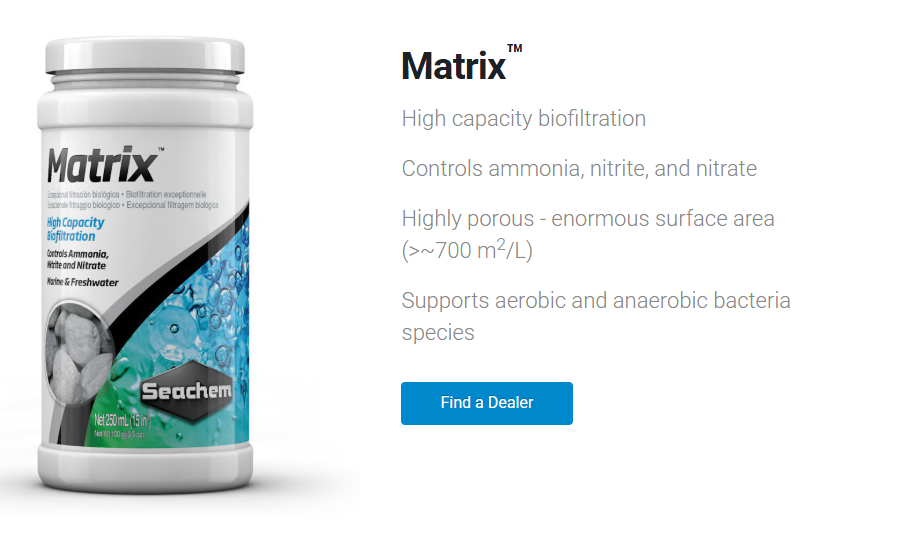
Our Frequently used AMAZON.COM Products
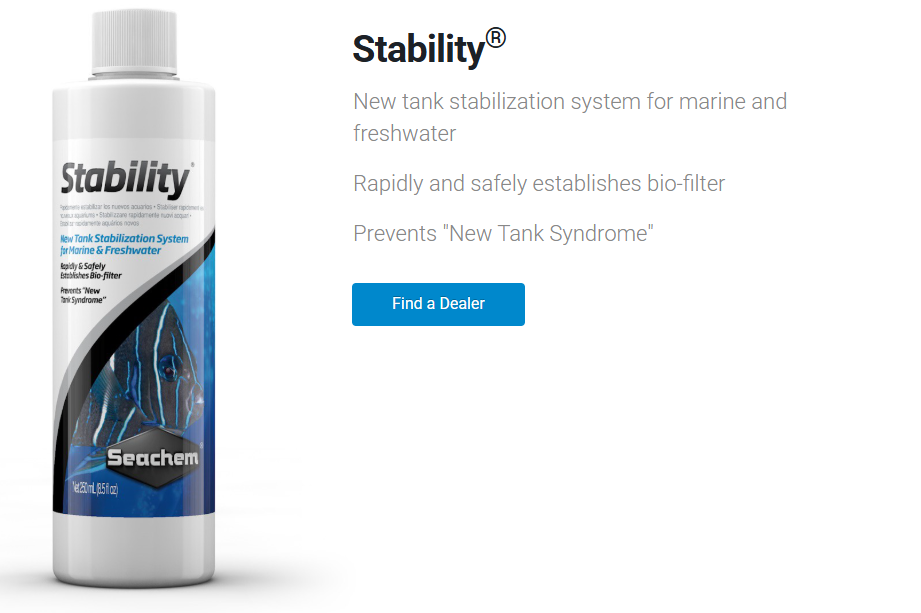
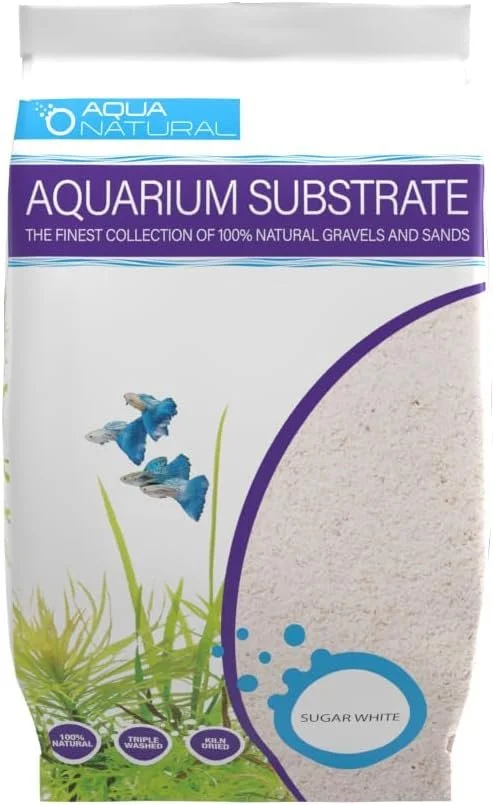
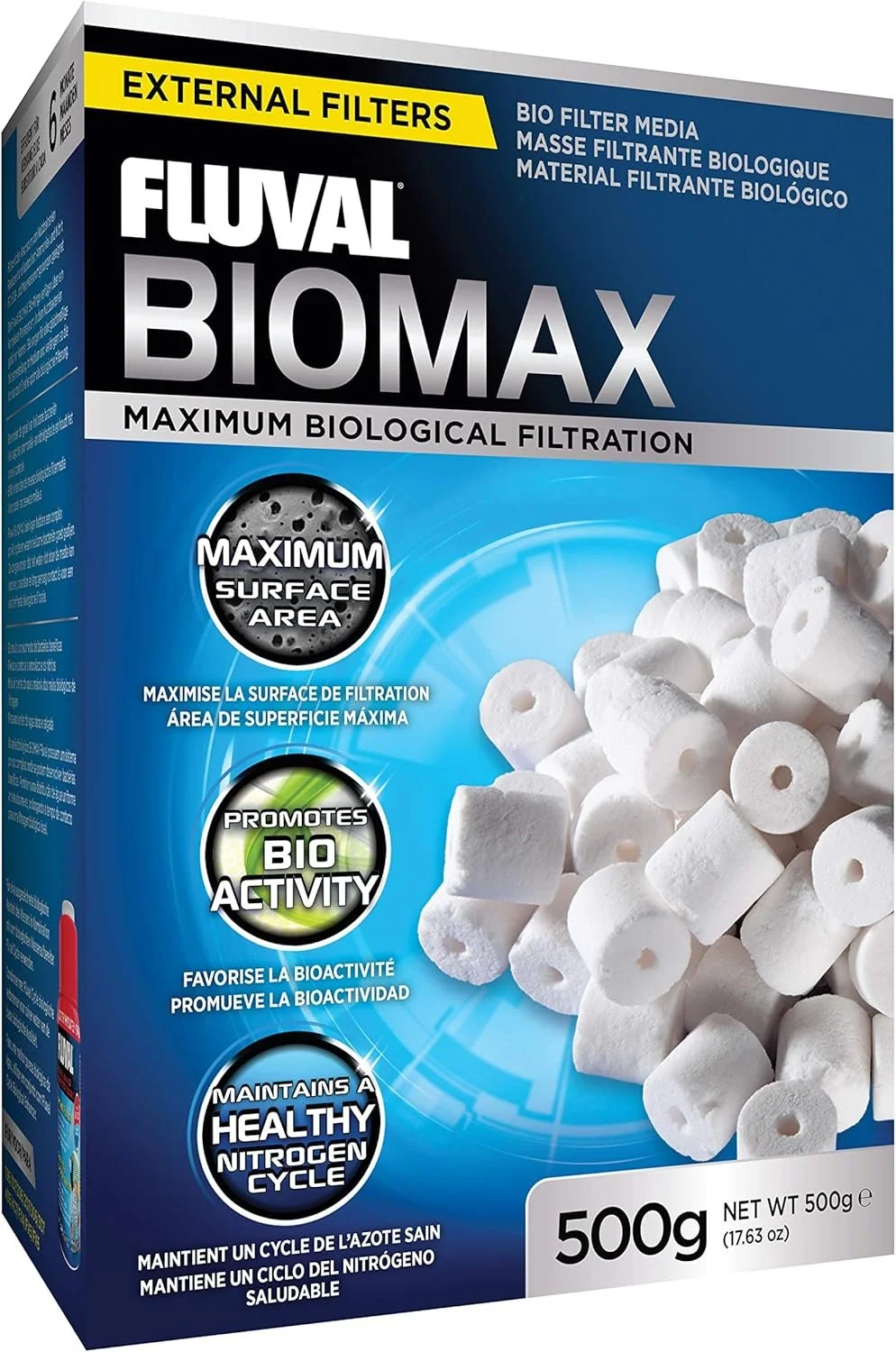
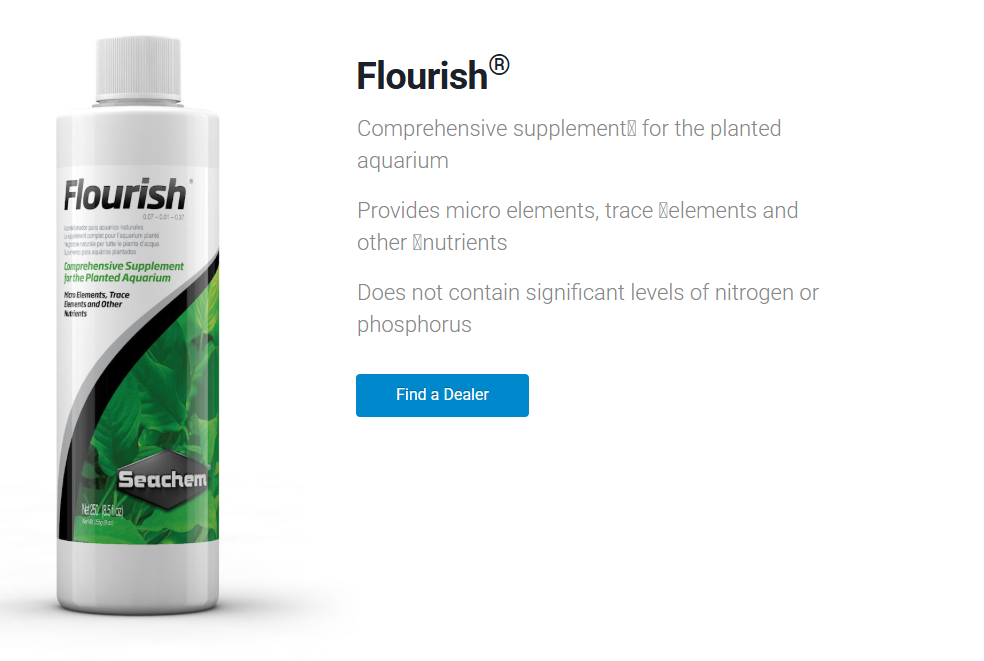
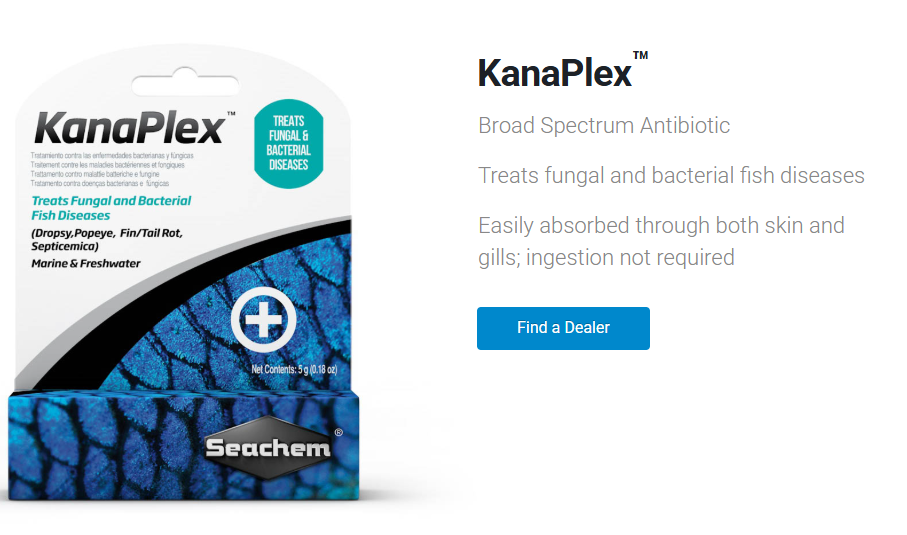
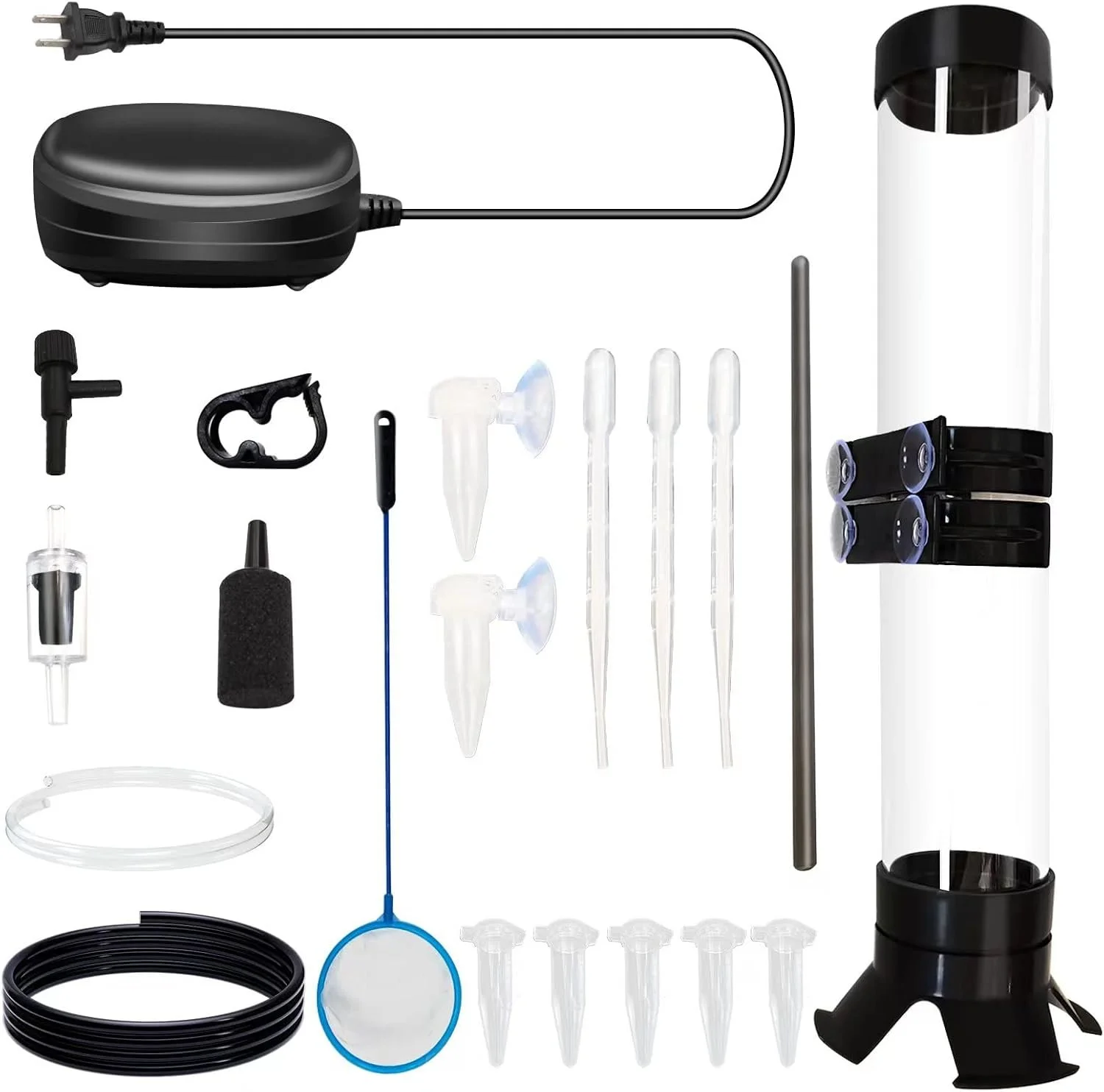
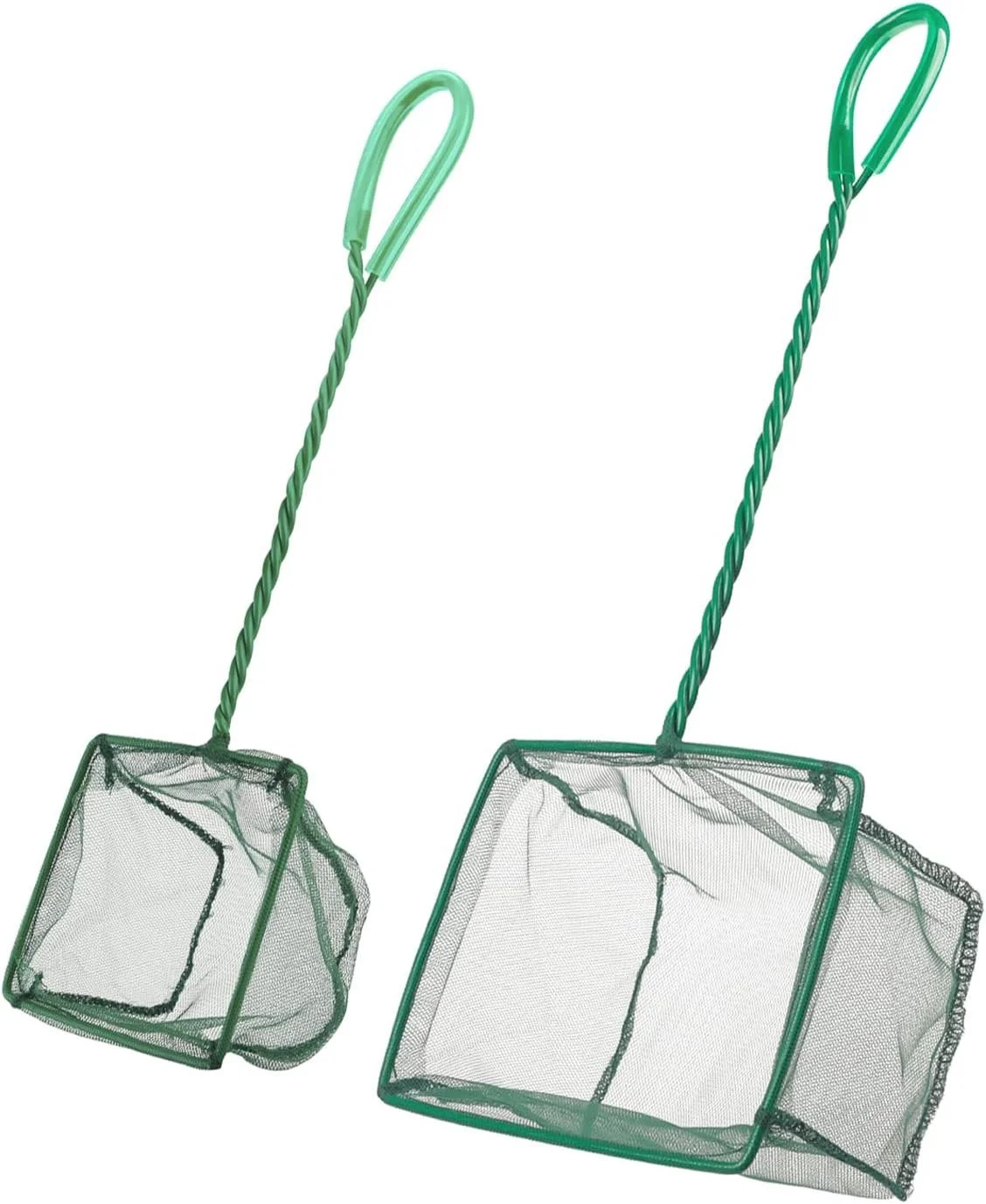
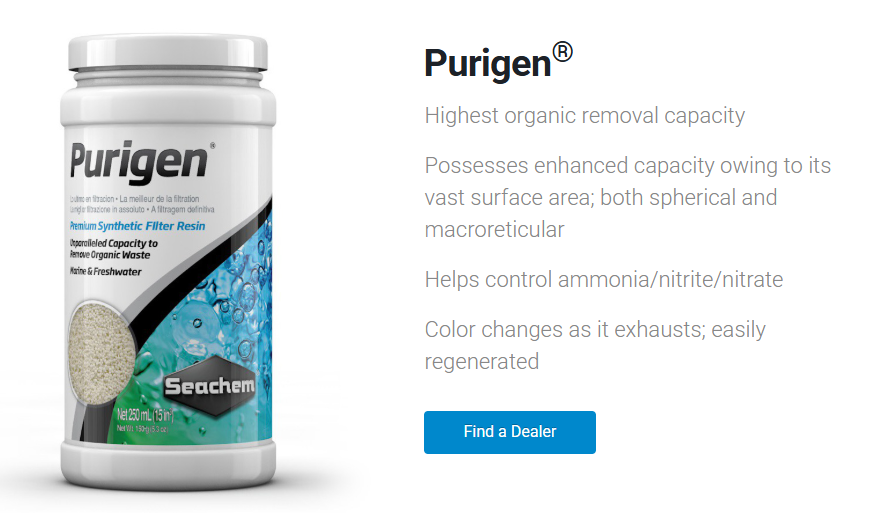
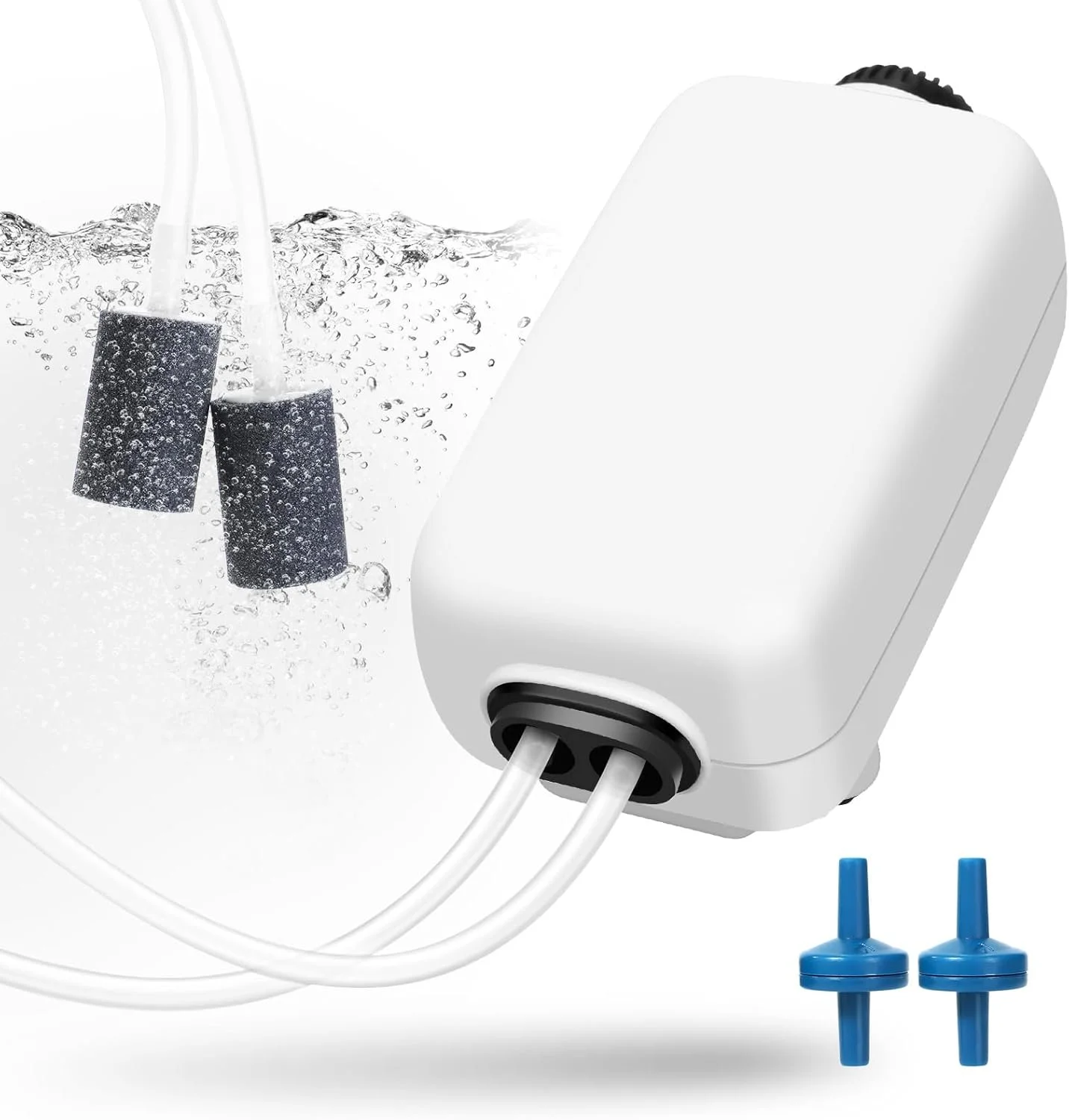
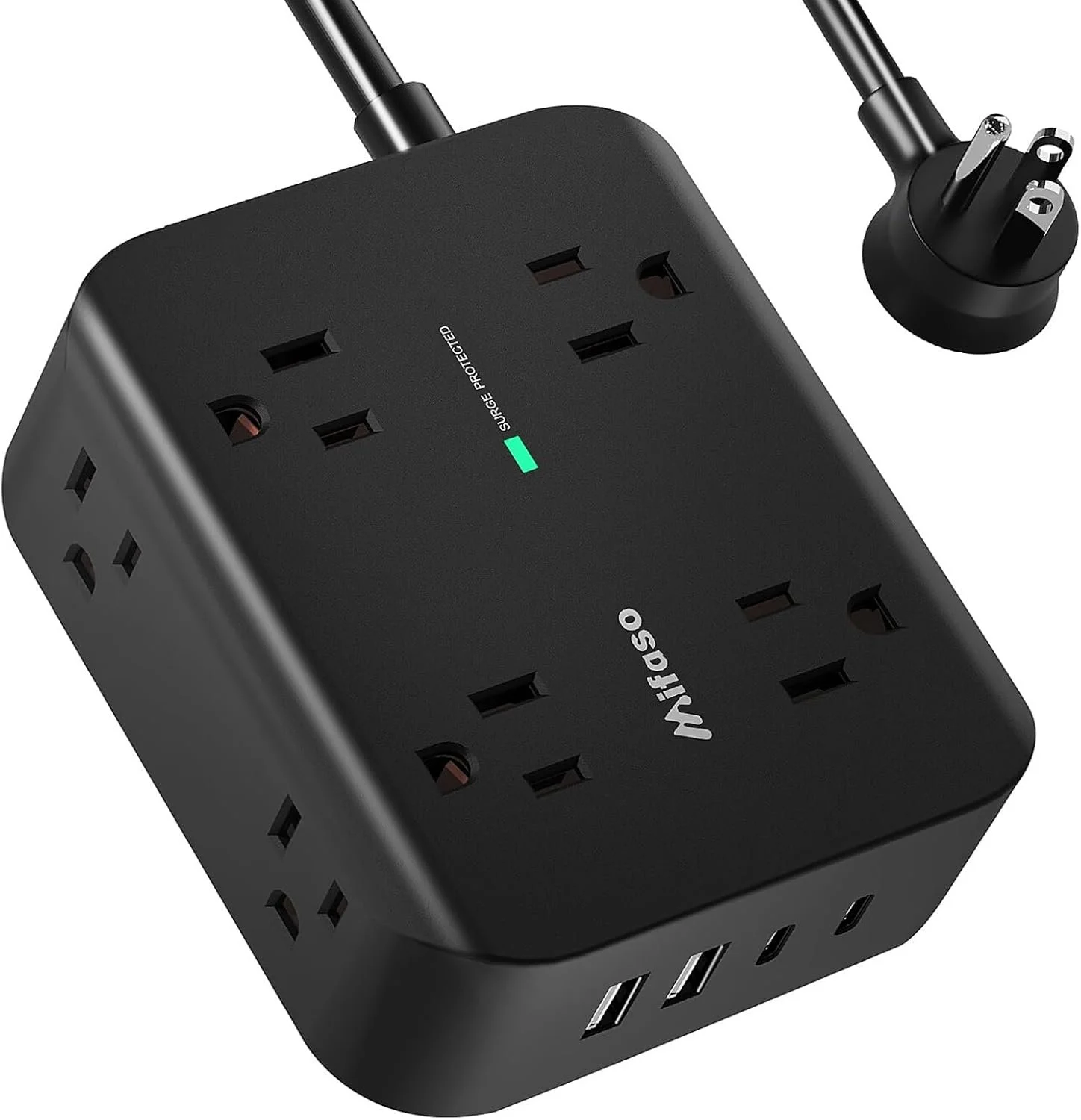
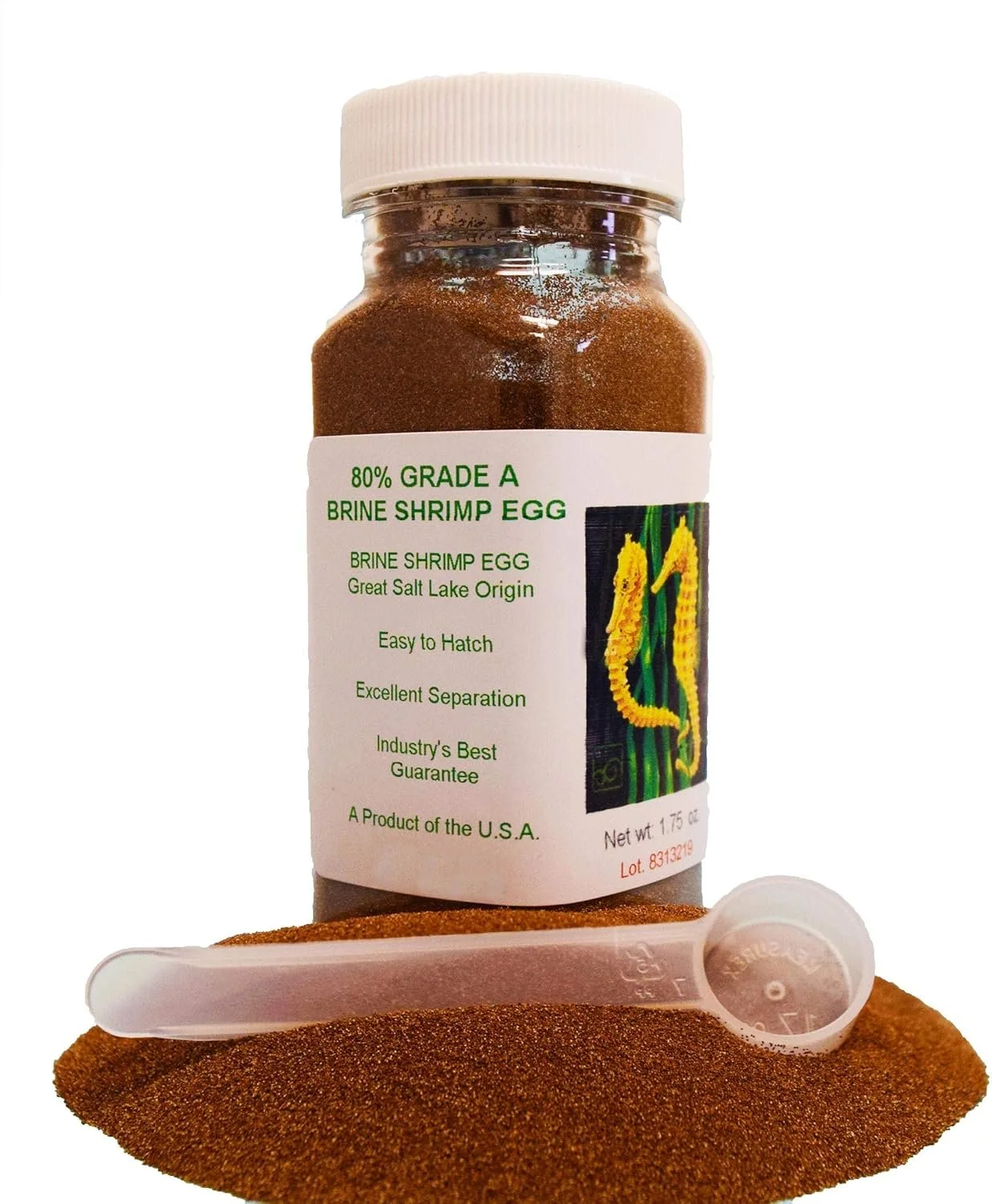
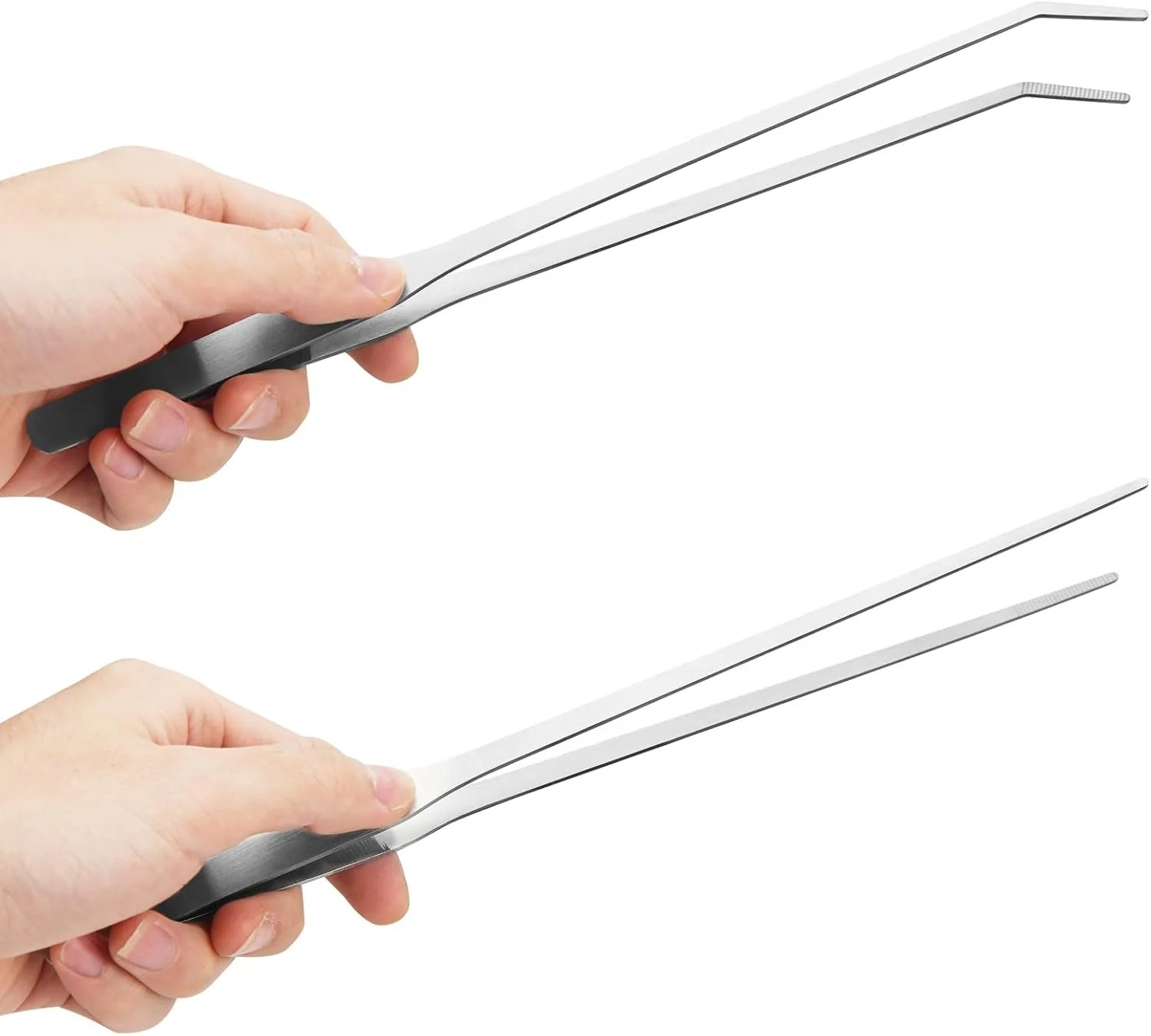
Maniacal Threadz [EXOTICS] has curated an Amazon Shop List of our Axolotl Care Must-Haves, bringing together the essential supplies we rely on every day. This list was created to give keepers easy access to proven caretaking products that support healthy environments, stable water conditions, and successful long-term axolotl care.
NOT ALL of these products will apply to your habitat. these products we use to help us maintain many tank sizes and breeding practices etc. Feel free to reach out if you have questions about specific products and the application in which we use them. maniacalthreadz@gmail.com





-
It all begins with an idea. Maybe you want to launch a business. Maybe you want to turn a hobby into something more. Or maybe you have a creative project to share with the world.
-
It all begins with an idea. Maybe you want to launch a business. Maybe you want to turn a hobby into something more. Or maybe you have a creative project to share with the world.
-
It all begins with an idea. Maybe you want to launch a business. Maybe you want to turn a hobby into something more. Or maybe you have a creative project to share with the world.
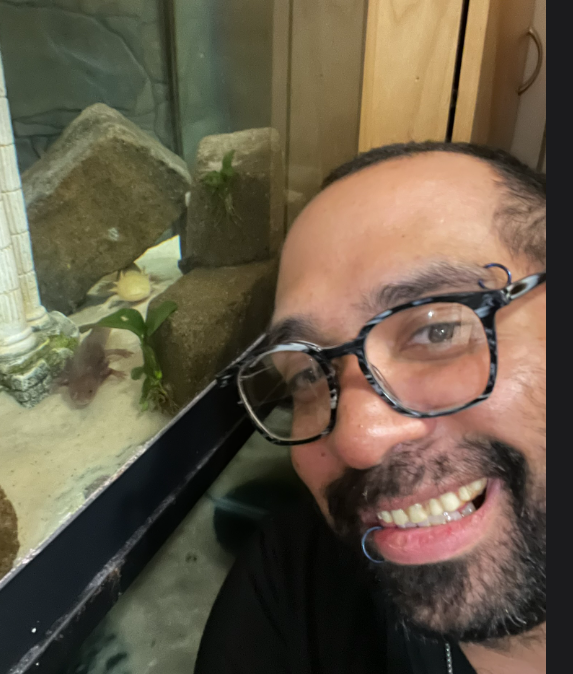
Jay, Keeper of Chaos & Care
Hi, I’m Jay — the creator behind Maniacal Threadz and the caretaker of a large, ever-expanding Axolotl Army.
My mission is to bring transparency, safety, and actual joy into axolotl education and ownership.
I work with dozens of morphs, study genetics, create YouTube content, and raise animals with the highest standard of care.
This isn’t just a hobby — it’s a passion, a community, and a commitment.